
Cozy Games Are Starting To Repeat Live Service's Mistake
Live service spent four years turning its own label into a warning. Cozy is on the same arc, four years behind.

TL;DR:
Live service did not collapse because the model was wrong. It collapsed because the trust supporting the model ran out.
Cozy is four years into the same arc. Palia, Disney Dreamlight Valley, and the “cozy live service” hybrids being greenlit now are the canaries.
The audience the cozy boom is built on reads monetization architecture inside the first session. Studios shipping live service mechanics in cozy wrapping are walking into a wall the audience built three years ago.
I have been in greenlight meetings over the past eight months where founders are pitching cozy games on monetization slides that would have been live service slides three years ago. Same DNA, different wrapping. The studios pitching do not see it. The publishers funding them do not see it.
The first studio to publicly demonstrate what happens when that mismatch ships was Singularity 6.
In March 2024, Singularity 6 shipped a cozy MMO onto Steam called Palia. The pitch was Stardew Valley meets Animal Crossing with friends, free to play, cosmetics-only monetization, the safe bet for the era. The studio was staffed by Activision Blizzard and Riot veterans. The funding was substantial. The aesthetic was right.
Two weeks after launch, 49 people were laid off. About 35% of the team.
Six weeks after that, another 36. Roughly 40% of who was left.
Two big rounds inside seven weeks of a Steam launch that was supposed to save the studio. A smaller round six months earlier had already telegraphed the trouble. The launch was the lifeline. It accelerated the bleed.
Daybreak Game Company acquired what was left in July 2024. Under new ownership the game stabilised. It currently holds Very Positive reviews on Steam, and the original player base grew. The all-time concurrent peak was set in May 2026, not at launch. The product found its floor. The studio that built it did not survive to see it.
Steam reviews settled at Mixed at launch. The store page never marked it as Open Beta, even though it was. The community noticed.
That is not a financial story. That is a trust story arriving early.
The audience’s eventual verdict vindicated the game’s core, but only after the team that built the original architecture was gone. The model mismatch did not kill the game. It killed the studio.
The Headline Everyone Is Already Reading
The macro picture is by now well-trodden ground.
Of the major live service launches in 2025, more than half lost 90% or more of their Steam peak within months. Sony’s twelve-live-service-games promise from 2022 produced exactly one survivor, Helldivers 2, and a $765 million Bungie impairment that I’ve written about before. Concord shut down in weeks. Marathon collapsed roughly 60% in its first month.
On the other side of the ledger, Stardew Valley has now sold over 50 million copies lifetime, more than doubling since May 2022 when it hit 20 million. One developer. No microtransactions. No battle pass. No expiry date on anything.
Matt Ball, Naavik, The GameDiscoverCo newsletter, every trade outlet running half a decade of attention-economy coverage. Everyone is making this point. The framing is correct as far as it goes. It is just not the interesting part.
The interesting part is what produced the collapse.
The Trust Debt Nobody Priced In
Live service did not fail because the design pattern was wrong. The design pattern works. Genshin Impact has cleared $5 billion in mobile revenue alone. Fortnite is a decade in and still printing money. The model is fine.
What collapsed was the trust supporting the model.
Between roughly 2018 and 2022, “live service” went from being a label that meant “ongoing content support” to a label that meant “this game will try to extract from you indefinitely, expire your progress, and lock cosmetic visibility behind seasonal urgency.”
Every battle pass that quietly expired locked content nobody could buy back. Every FOMO-bundled limited-time event taught the audience that absence costs money. Every cosmetic tied to season-pass currency rather than gameplay achievement taught the audience that the time they spent in the game was working for the publisher’s quarterly numbers rather than their own progression.
Destiny 2 was where most of that vocabulary was learned, and Bungie announced its sunset this week.
By 2022, the trust debt was already past the point where new entrants could borrow against it.
This is what the 2025 graveyard actually represents.
The 11-of-19 cliff is not a marketing problem. It is not a design problem. It is players showing up at the door of a new live service game in 2025 already knowing what is on the other side of the menu.
They have been burned three times. They are now sampling for ten minutes and leaving, before the monetization layer ever loads.
When a category accumulates that much trust debt, the credit window closes for everyone in the category, including the ones who would have done it honestly.
The same window is now closing in cozy.
What Palia Was Actually Telling Us
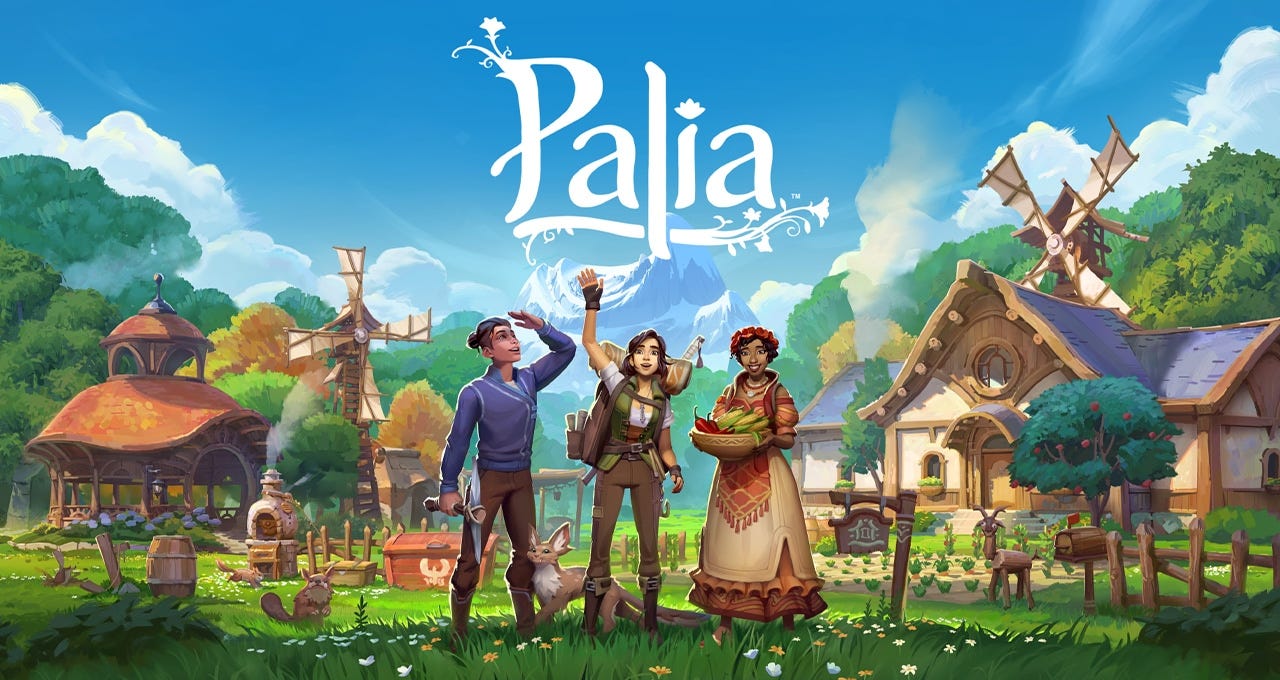
Singularity 6 was not a bad studio. The art was good. The core loop was charming. The early access reception suggested a real audience. What killed it was not execution. It was structural mismatch.
The team was staffed by veterans of Riot and Activision Blizzard.
The DNA they brought into the studio was free-to-play live service DNA: timer systems, slow progression curves, cosmetic stores with premium currencies.
The clearest tell was the Steam launch itself, which the team would not label as Open Beta on the store page; all because that label would have suppressed conversion.
Players showed up for a cozy game and met a live service game wearing a cozy skin.
The entire reason the audience is in this genre is that they want the opposite of what the publisher’s DNA was built to deliver. The trust debt that live service had been accumulating in the FPS and shooter categories was now sitting in the lobby of the cozy MMO too.
Two rounds of layoffs inside seven weeks of launch, an acquisition by July, the founding team scattered. That is what the cost of misreading the audience looks like at studio level. The product survived. The architecture decision did not.
Disney Dreamlight Valley, Same Arc
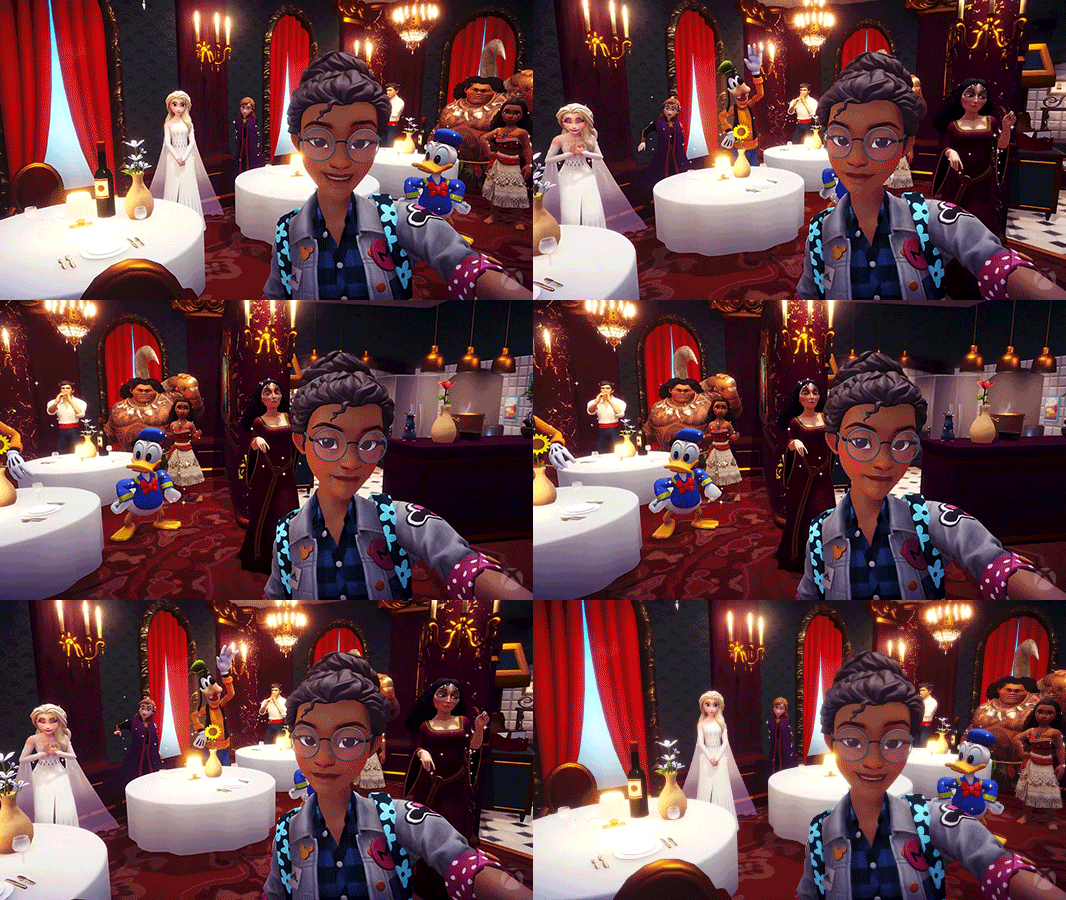
Gameloft’s Dreamlight Valley is the slower-moving version of the same pattern. Launched in early access with a clean promise from the studio: “no paywalls and no pay-to-win mechanics”, cosmetic items only.
What followed across 2023, 2024, and 2025 was a slow rolling erosion of that promise.
A battle pass called the Star Path, costing around $10 per cycle and expiring every two months.
A premium currency called Moonstones with FOMO weekly resets in the shop.
A “Dream Bundle” that broke the cosmetics-only promise by locking actual sidequest content behind real money.
Items disappearing from Scrooge’s catalog and apparently being moved into the premium store.
Each individual change was small. The cumulative direction was unmistakable. The community noticed.
Reviewers stopped recommending the game without caveats.
The cozy gaming subreddits started posting warnings for new players.
Steam’s all-time review score sits around 92% positive, but average concurrent players have drifted from a launch peak of 14,314 to a monthly average now running below 3,000, an 80% collapse from peak.
Disney’s franchise weight is keeping the headline score intact while the engagement signal underneath degrades at the rate the monetization changes have been rolling in.
This does not look like a crash. It looks like creeping skepticism that hardens into a category-wide credit freeze three years later.
Why The Four Community Engines Cannot Hold This
I wrote about four community engines earlier this year.
Engine 1 is push without a community: the Concord model, dying at every price point.
Engine 2 is community built for too narrow a slice: the Stormgate failure.
Engine 3 is memetic participation: the Helldivers 2 model.
Engine 4 is built-in shareability: Dead as Disco and Burglin’ Gnomes, where the gameplay loop manufactures its own marketing.
Cozy does not fit any of them.
Stardew Valley does not have a memetic community. There is no Malevelon Creek meme. There is no parody artifact loaded with cultural lineage. The game does not produce shareable highlight reels. The gameplay loop does not generate a TikTok-native artifact. None of the four engines describes what is actually happening.
What is actually happening is something different. The community exists around the game rather than because of the game. The r/CozyGamers subreddit grew to hundreds of thousands of members organically. The TikTok cottagecore aesthetic adjacent to the genre is a cultural movement that pre-existed any single title. The community is not a property of the game.
The game is a property of the community.
That is a fifth engine, and the design constraint is the inverse of the other four: The game cannot manufacture community. It can only earn the right to host an existing one.
That sounds soft until you realize what it actually demands. The studio has to refuse the engagement-farming levers that live service spent a decade building muscle around. Persistent progression. No expiry on anything the player earned. One-time purchase economics, or cosmetic monetization that does not gate gameplay or shame absence.
The DNA that produces those levers does not survive being asked to give them up.
Singularity 6 demonstrated this fast. Gameloft is demonstrating it slowly.
The Casino Economy Connection
I wrote a Casino Economy series earlier about Gen Alpha developing herd immunity to FOMO mechanics. The argument was that the cohort raised inside loot boxes and gacha pulls is now routing around the casino: grinding instead of gambling, coordinating instead of competing individually, treating the act of spending as something that earns peer scorn rather than peer envy.
The cozy market is the mirror of that, displaced by twenty years.
Women 30+ are the fastest-growing segment of cozy game buyers, by a wide margin. They are not Gen Alpha. They are the Millennial cohort who lived through the casino’s construction as adults, the cohort that learned to recognize the manipulation while it was happening rather than from the inside. They are now the cohort with disposable income to vote with their wallets.
Gen Alpha grinds. Millennials cocoon. Both are refusal moves against the same extraction logic. The cozy correction is what casino refusal looks like when it has thirty years of disposable income behind it.
This is why the live service invasion of cozy is so structurally dangerous. The moment the cozy label gets attached to a product running the casino’s monetization grammar, the audience is testing for it before they finish the tutorial. They have been reading these tells for decades.
What This Means For Studios In Production Right Now

If your studio is greenlit for a cozy or cozy-adjacent title shipping in 2027 or 2028, three questions force the honest answer:
First: Does any system in the game punish the player for not showing up?
Battle passes that expire, seasonal events with FOMO rewards, daily streaks that reset, premium currency that ages out, cosmetic items that rotate through a store and may not return. Any of these is a casino primitive grafted onto a cozy skin. The audience will read it within the first session.
Second: Is there a single subsystem in the game whose primary purpose is to make the player aware of something they could buy?
A red dot on a menu. A premium currency counter visible during gameplay. A storefront that loads in the background of the loop. Cozy works because it tolerates absence. Stores that are visible during play do not tolerate absence, they remind the player constantly that they are inside an extraction surface.
Third: If the publisher decided tomorrow to stop monetizing the game entirely, would the studio be able to keep delivering the gameplay experience it promised?
If the answer is no, you are not running cozy. You are running live service in cozy paint. Players will sample your game, identify the mismatch, and leave inside ten minutes. The marketing layer cannot save this. The community engine cannot save this. You picked the wrong architecture, and the architecture is what the audience is testing for.
The Contract
Cozy is not a genre. The pixel art is not the product. The farming sim is not the product. The Disney IP attached to a battle pass is definitely not the product.
What the cozy audience is buying is a contract.
The contract says: this game will not punish me for absence, will not expire on me, will not manipulate me into spending money to avoid losing something I already invested time in.
The contract is the product. The aesthetic is just the wrapping.
Most of the cozy slate currently in production for 2027 and 2028 will ship that wrapping; with the contract violated underneath, because the studios building it cannot give up the levers their organizational DNA was built around. The audience will read it inside a session. The marketing layer cannot save this. The community engine cannot save this. Wrong architecture for the audience showing up.
The studios that ship a cozy aesthetic attached to live service monetization will be writing down assets the same way Sony is writing down Bungie now.
The studios that ship a cozy experience with a cozy contract intact, and refuse the levers their organizational DNA wants to pull, will have clear water ahead of them for a decade.
The choice is being made right now, in greenlight meetings, on monetization slides nobody is challenging hard enough, in publishing deals signed against KPIs that assume the casino’s grammar.
The audience is already past it. The studios just haven’t caught up.
If your studio is shipping into the cozy or cozy-adjacent space in the next two years and wants to run this diagnostic against your monetization architecture before it locks, that is the work I do.
Abbas Saleem is Principal Consultant at Llama & Griffin, working with game studios across six continents. He writes The Pattern Recognition, providing gaming industry intelligence 12 to 24 months before consensus.
"Cozy live service" sounds like an oxymoron, like "jumbo shrimp" or "airline food." Two concepts that just don't jive together.
Very insightful as always, Abbas!
I agree that we're all a little burnt out by the business model and the somewhat insincere presentation. So at this point, I'm struggling to see a world in which any F2P game-as-a-service outside of mobile makes sense.
So I'm curious about your take on what good looks like on the live service front. What scenarios, what conditions, what benchmarks.