
Far Far West didn’t win Steam Next Fest. It harvested what it had already grown.
How a Small French Studio Built 536,000 Wishlists Before the Game Was Finished

TL;DR
Steam Next Fest (Steam’s largest recurring demo event, run three times per year) is supposed to be where breakout games are discovered. Far Far West proves it is where they are confirmed.
Evil Raptor entered February 2026 with 435,000 wishlists (bookmarks players use to track games they want to buy). The fest added 101,000 more. It amplified what existed. It did not create it.
The number that actually matters is 19%: the share of existing wishlisters who played the demo. That ratio tells you whether a community is real or purchased. Theirs was real.
The mechanism was five staged beats across nine months. Discord (community hub) live before the announcement. Open playtest five months out. Each move had a distinct job. The demo was the harvest, not the launch.
Fireshine Games made things possible that eight people cannot arrange alone. A world premiere slot at the PC Gaming Show does not happen without industry relationships.
Co-op games generated $8.2 billion on Steam in 2025. Evil Raptor didn’t just enter that market. They found the gap inside it.
Last week I wrote about why the studios that won Next Fest won it long before the event started. A few people came back with the obvious follow-up: fine, but what does that actually look like in practice?
Far Far West is the answer.
The Studio You Didn’t Know You Were Watching
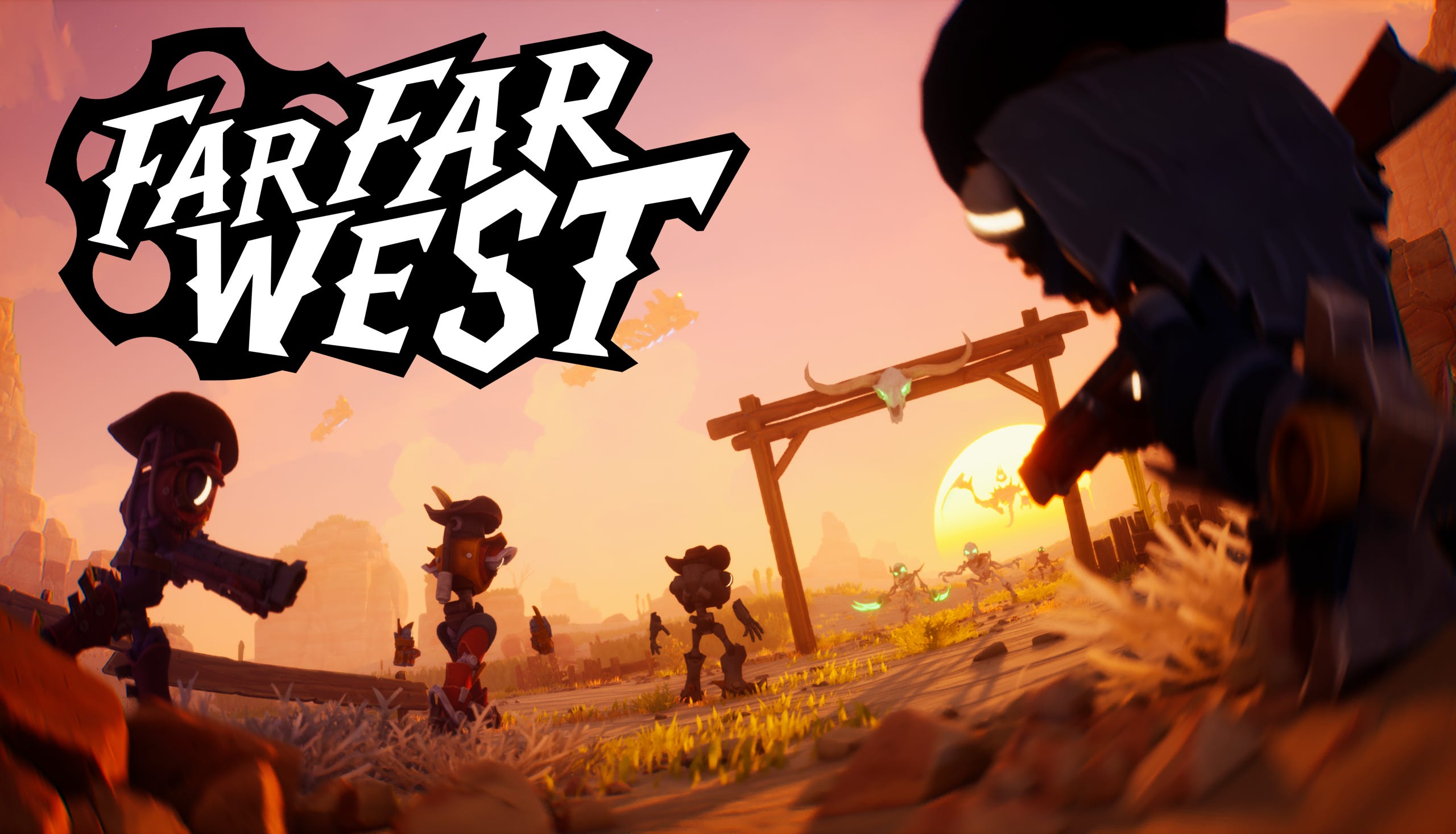
Nicolas Meyssonnier built Pumpkin Jack alone. One person, shipped October 2020, 91% positive on Steam, genuinely good. SteamDB has the full review history. That success gave him the credibility and resources to found Evil Raptor as a proper studio in Lyon, France.
Their second game, Akimbot (PLAION), shipped in August 2024: a Ratchet and Clank-inspired action platformer that landed “Very Positive” and earned praise for its art direction. Well-received but not a breakout hit. Enough.
By the time Far Far West was announced, Evil Raptor wasn’t an unknown quantity. Two complete, polished shipped games meant press and players already associated the name with “small team, higher production value than they have any right to.” That is invisible marketing equity, and it compounded into everything that followed.
I’ve watched studios with genuinely great games struggle at Next Fest because they were functionally unknown, then watched others with comparable games sail through because they had years of prior work establishing a reputation. The prior shipped games are not just credits.
They are trust collateral that pays out the moment the algorithm needs to decide whose next thing to show people.
The Genre Bet
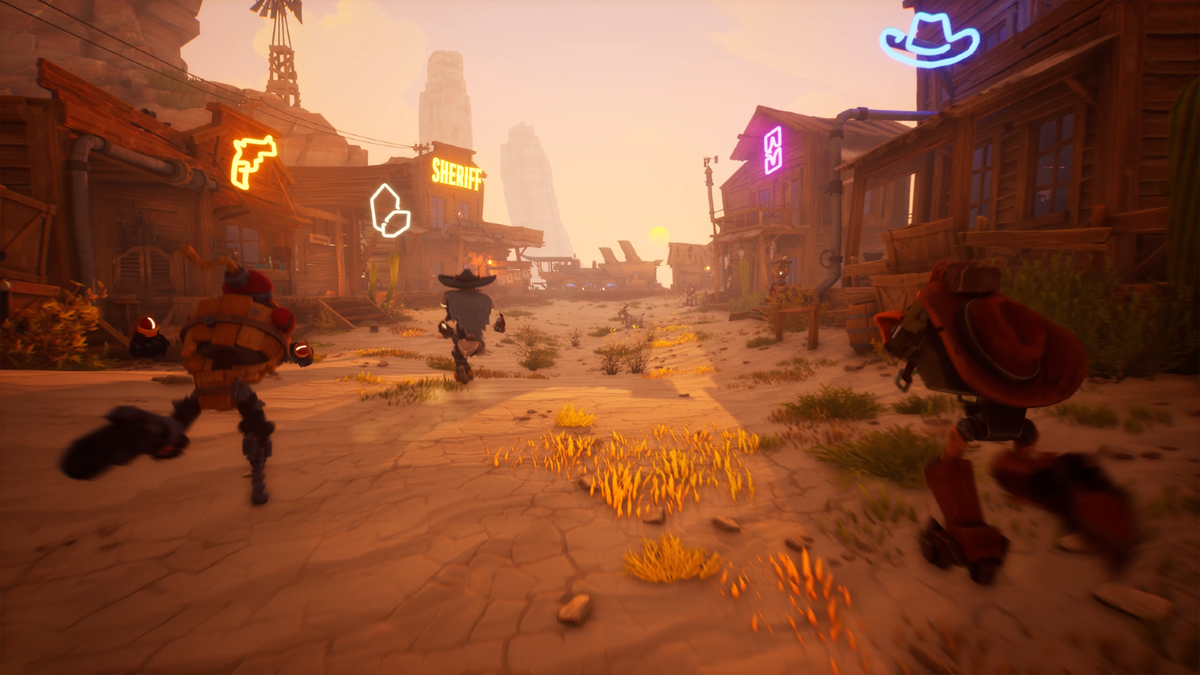
Far Far West is a 1-4 player co-op PvE (cooperative play against AI enemies) first-person shooter. Robot cowboys. Supernatural Wild West. Spell combos layered onto gunplay.
This sounds like a weird niche until you look at the numbers. Co-op games generated $8.2 billion in gross revenue on Steam in 2025 alone, up 9% from 2024 and the highest the platform has ever recorded, per Notebookcheck’s analysis of Steam data. Seven of the top new titles of 2025 leaned heavily cooperative. The co-op market has roughly tripled since 2019.
Evil Raptor found a very specific gap inside a niche genre: a co-op FPS (first-person shooter) with the objective-driven loop of Helldivers 2 (punishing co-op shooter, one of 2024’s biggest games) but built for players who want something more forgiving, more social, more “hang out with your friends on a Saturday night.”
Kotaku described it as Helldivers if it were a bit more chill and a bit more cowboy-themed. That is not a review. That is the entire market thesis in one sentence.
The distinction matters because product-market fit is a prerequisite for community. You can build a great Discord server, run a playtest, land a world premiere slot, and still not see the numbers move if players can’t immediately understand what you’re offering. Far Far West gave players a sentence that worked.
The Five Beats, In Order
This is the part most post-mortems skip, so I’m going to be specific about the sequencing.
May 2025: Discord server launched before the announcement. Not after. The server was live on May 28, 2025: ten days before the PC Gaming Show reveal, per the official Discord server. When that initial wave of interest hit, there was already a destination. By March 2026 it had 37,500 members.
June 2025: PC Gaming Show world premiere. The Steam page (the game’s storefront listing) and wishlist button went live the same day the trailer dropped at the PC Gaming Show on June 8, 2025. This is the timing discipline that indie marketing people call the “double jump”: pair the announcement with a high-visibility platform so the initial curiosity spike has somewhere to land immediately.
October-November 2025: Open playtest on Steam. Players reported five to twenty hours of playtime in a single weekend, per community posts in the Far Far West subreddit.
The playtest added 10,000 new Discord members on its own. More importantly, it generated actionable feedback: players wanted more weapon upgrades, more spell variety, more personalisation options. That feedback is not just design data. It is community ownership. When players feel they shaped the game, they become advocates for it.
January 2026: Gameplay Overview Trailer through IGN (major games media, tens of millions of monthly viewers). Not another cinematic. A three-and-a-half-minute walkthrough of an actual play session, narrated by Fireshine’s own Senior Product Manager, published January 9. The purpose was conversion, not awareness. This was the trailer for people who already knew the game existed and needed to be pushed from “interested” to “going to try the demo.”
February 2026: Next Fest demo. By this point they had 435,000+ pre-existing wishlists, months of algorithmic visibility, a primed community, and a demo that earned Overwhelmingly Positive on Steam (a rating threshold requiring 95%+ positive reviews, which triggers additional algorithmic promotion across the platform).
Per Alinea Analytics’ post-fest breakdown, 19% of total wishlisters actually played the demo during the event. That engagement ratio is the number that tells you the community was real, not purchased.
Every beat had a distinct job. Announce. Capture. Validate. Convert. Harvest. In that order, over nine months.
The Publisher Variable
Evil Raptor did not do this alone, and I think it’s worth being direct about that because the “scrappy indie” narrative obscures something useful.
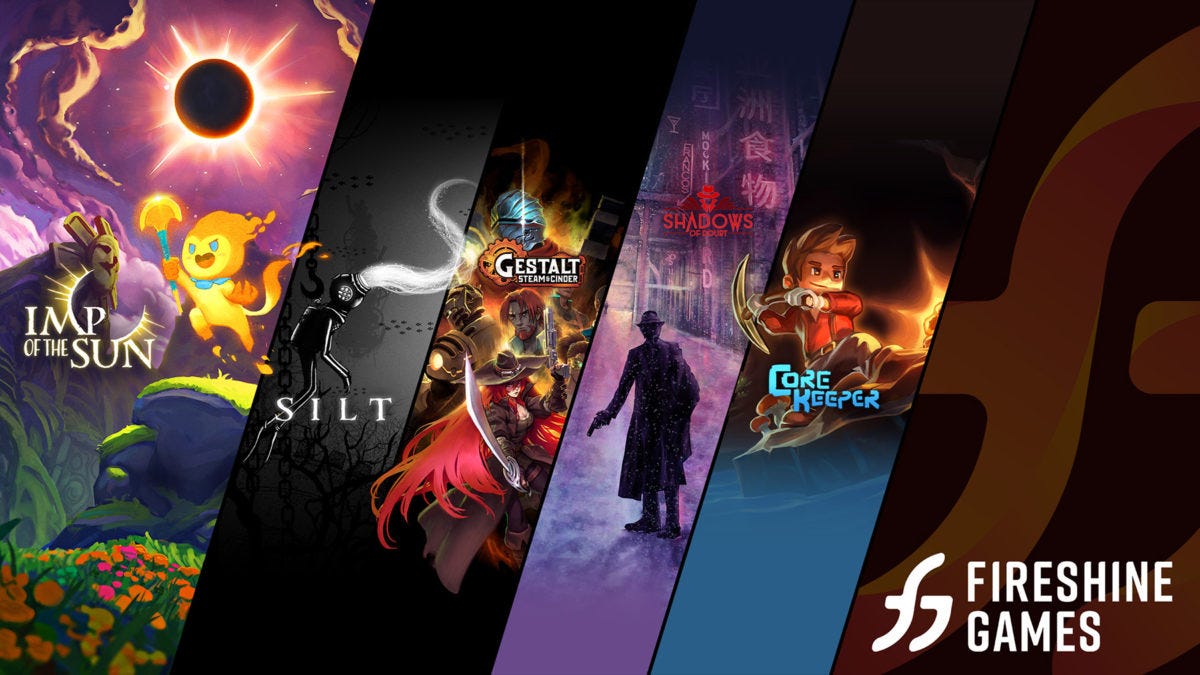
Fireshine Games (Core Keeper, Atomfall) handled marketing and publishing. They had four titles in February 2026’s Next Fest: Far Far West, Denshattack!, Gunboat God, and Iter-8, per Fireshine’s own Next Fest analysis. That portfolio approach lets a publisher cross-promote across events and share learnings between titles in ways a single studio simply cannot.
Getting a “World Premiere” slot at the PC Gaming Show is not something an eight-person team typically arranges by themselves. The Gameplay Overview Trailer being narrated by Fireshine’s own Senior Product Manager means the publisher directly produced marketing content, not just facilitated access to press. These are real contributions that changed the outcome.
Fireshine’s stated pitch to developers is that they provide marketing, PR, and QA without taking the IP (ownership rights to the game itself). For Evil Raptor that meant full creative control and outsourced execution.
I’ve advised studios on publisher relationships where the terms were quietly extractive even when they looked supportive on the surface. The thing to look for is not the marketing spend. It’s the IP retention clause and the milestone structure. Those are the terms that determine whether the relationship actually serves the studio long-term.
Why the Demo Itself Was the Marketing
The Overwhelmingly Positive rating the demo earned on Steam is not just a feel-good number.
Steam’s algorithm (its recommendation engine) treats review scores as a primary visibility signal. Overwhelmingly Positive games get recommended more aggressively in discovery queues, in “More Like This” sections, and in curator feeds. A highly-rated demo creates a flywheel (a self-reinforcing cycle where each element feeds the next): good game, good reviews, more algorithmic placement, more players, more reviews. The rating is infrastructure.
The gunplay was described universally as snappy and hefty in a way that surprised reviewers for a studio of this size. One YouTuber compared the weapon feedback to Bungie-quality (Halo, Destiny; the gunfeel benchmark), per this gameplay review. For eight people using Unreal Engine (the most widely used commercial game development platform), that level of polish is the right place to have invested.
Indie studios chronically underinvest in game-feel: the tactile second-to-second satisfaction of the basic interaction. They spend money on content that players never reach because the foundational feedback isn’t there.
The card-based spell system adds strategic depth without demanding it. Acid puddles ignited by a teammate’s fireball creating emergent combo moments is the kind of mechanic that generates the “you’re not going to believe what just happened” stories players tell each other at midnight. That is organic marketing, and no amount of PR spend buys it.
“Robot cowboys who are also wizards” is also absurd enough to stop the scroll when someone is moving through 3,500 demos. Specificity is the enemy of obscurity. When your game can be described in a sentence that makes someone lean forward, half the marketing is already done.
What the Data Actually Shows
536,000 total wishlists is a strong number. But I spent the previous post explaining why it shouldn’t be your primary lens, and the FFW data makes the same case from the other direction.
The number that tells the real story is 19%: the share of existing wishlisters who actually played the demo, per Alinea Analytics. That is your community health signal. That is the evidence that the people who wishlisted meant it.
For comparison:
Windrose, which led the fest with 351,000 wishlists gained during the event, entered with 40,000 Discord members already in place, per Alinea Analytics.
Burglin’ Gnomes had nearly half their total wishlisters actually play the demo; the highest engagement ratio in the fest, per Alinea Analytics.
Far Far West’s 19% sits in the same tier: a pre-existing audience that showed up, not strangers who stumbled in.
Steam’s algorithm cares about velocity (wishlist growth rate in real time), per GameDiscoverCo’s post-fest analysis.
Far Far West had nine months of staged beats creating genuine community velocity.
That velocity is what pushed it into Popular Upcoming tabs and triggered recommendation loops. The algorithm amplified momentum that was already there.
The Caveat That Matters
536,000 wishlists is not 536,000 sales.
Alinea Analytics puts the industry conversion rate bluntly: most Next Fest games convert less than 10% of wishlisters into buyers within a month of launch. Far Far West is heading into Early Access (sell while finishing; players buy in early and give feedback) later in 2026. The community health they’ve built is a genuine advantage. It is not a guarantee.
Solo play is viable but clearly secondary to the co-op experience, which limits total addressable audience. No console release has been confirmed despite visible demand. Early Access requires ongoing content delivery to maintain the community through the development period: that is a different operational challenge than building the wishlist.
The foundation is extraordinary. What happens on it depends on decisions they haven’t made yet.
The Reframe
The pattern from my previous post holds when you look at the operational specifics here.
Evil Raptor didn’t get 536,000 wishlists because they had a lucky week at a demo event. They ran five staged beats over nine months. A publisher who got them into rooms an eight-person studio can't enter alone. A 37,500-person community built through genuine product engagement rather than marketing spend. A demo so polished it generated organic press coverage without anyone needing to ask for it.
Next Fest harvested what they’d grown. That’s the sequence. That’s always the sequence.
The studios asking “what should we do at Next Fest?” are asking the wrong question. Far Far West answered a different one: what should we have done in the nine months before it?
If that question is one you’re currently sitting with, here’s what I do.
What I Help Studios With
If you’re planning for June 2026’s Next Fest and building the strategy now, the audit question isn’t “how many wishlists do we have?” It’s whether you have the community infrastructure to generate genuine velocity when the moment arrives. I help studios and publishers run that diagnostic and build the sequence that changes the answer.
Abbas Saleem Khan is Principal Consultant at Llama & Griffin, advising game studios, streaming platforms, and investment funds across six continents. He writes The Pattern Recognition: gaming industry intelligence 12 to 24 months before it becomes consensus.