
First Time User Experience: The 60 Seconds That Decide If Your Player Stays.
The first 60 seconds in a game are the most critical experience for a player. Capturing their attention within this time is the difference between a good and bad game

TL;DR
FTUE is the First Time User Experience: the opening minutes of a game, from the title screen to the moment the player actually understands what they're holding. On Steam, PC, and console, those minutes arrive after the player has already paid
That receipt gets signed or revoked in the first session, not over the first ten hours. Your player watched the trailer, read the reviews, checked the price, and committed. The opening isn’t where you make your case. It’s where you prove the case the storefront already made on your behalf was true.
Steam’s 2-hour refund window is a hidden design constraint, and most studios design as if it doesn’t exist. You have under two hours of playtime to make the purchase feel justified. Miss it and the storefront hands the player their money back.
Over-tutorialization is the number one way premium FTUE fails. It’s the opposite of mobile’s failure mode. Mobile fails by asking too much too fast. Premium fails by trusting players too little and burying the core loop behind instruction.
The first failure should be designed, not avoided. On mobile, an early loss is a churn event. On premium, a fair, well-framed early loss is where the game reveals its real identity.
Sunk cost is not a retention strategy. A player who finishes the first session out of stubbornness is not retained. They are one bad moment from a refund, and the strongest retention driver isn’t the money they spent. It’s whether the opening confirms the kind of player they bought the game to be.
What is FTUE
A player launches your game for the first time. Title screen, first input, first thing they’re taught, first thing they’re allowed to do. That stretch has a name in the industry: the FTUE, the First Time User Experience. It’s the onboarding, the opening tutorial, the first session, everything between “press start” and the moment the player actually understands what they’re holding.
It is also the most fought-over stretch of design in the entire industry. The FTUE gets storyboarded, instrumented, playtested, torn down, and rebuilt more than any other part of a game. Whole careers are spent on the opening tutorial. Whole launches are decided by it.
So you’d expect the people who specialize in it to broadly agree on how it works. They don’t. And the reason they don’t is that two designers can be staring at the same first screen while solving completely opposite problems.
A mobile free-to-play designer is trying to convince a stranger to stay. The player has paid nothing, committed nothing, and will be gone in seconds if the case isn’t made.
A Steam or console designer is trying to justify a purchase the player already made. The trailer sold them, the money is spent, and the only question left is whether the game keeps the promise the storefront made on its behalf.
Same design surface. Opposite contract. One opening has to seduce. The other has to deliver.
Adrian Wust of Steer Studios and I wanted to write that argument out in full, from both sides, at the same time. So we split it. Two pieces, one collision, published together on purpose.
Adrian’s article is on his Linkedin - https://www.linkedin.com/pulse/ftue-mobile-free-to-play-you-havent-paid-yet-thats-why-adrian-w%C3%BCst-ic8xf/?trackingId=HSiN6dKqQ2q1aCuQ1fhbog%3D%3D
They disagree where the platforms genuinely diverge, and they agree on the one thing both halves of the industry forget: the first ten minutes is where you earn the player, and almost nobody designs it like they believe that.
I’m taking Steam, PC, and console: the premium contract, where the player already paid and the FTUE is a receipt, not a sales pitch. Adrian takes mobile free-to-play, where the argument has to land before the player ever commits.
Read one, read both. They’re built to be read against each other.
Two Players, Two Contracts
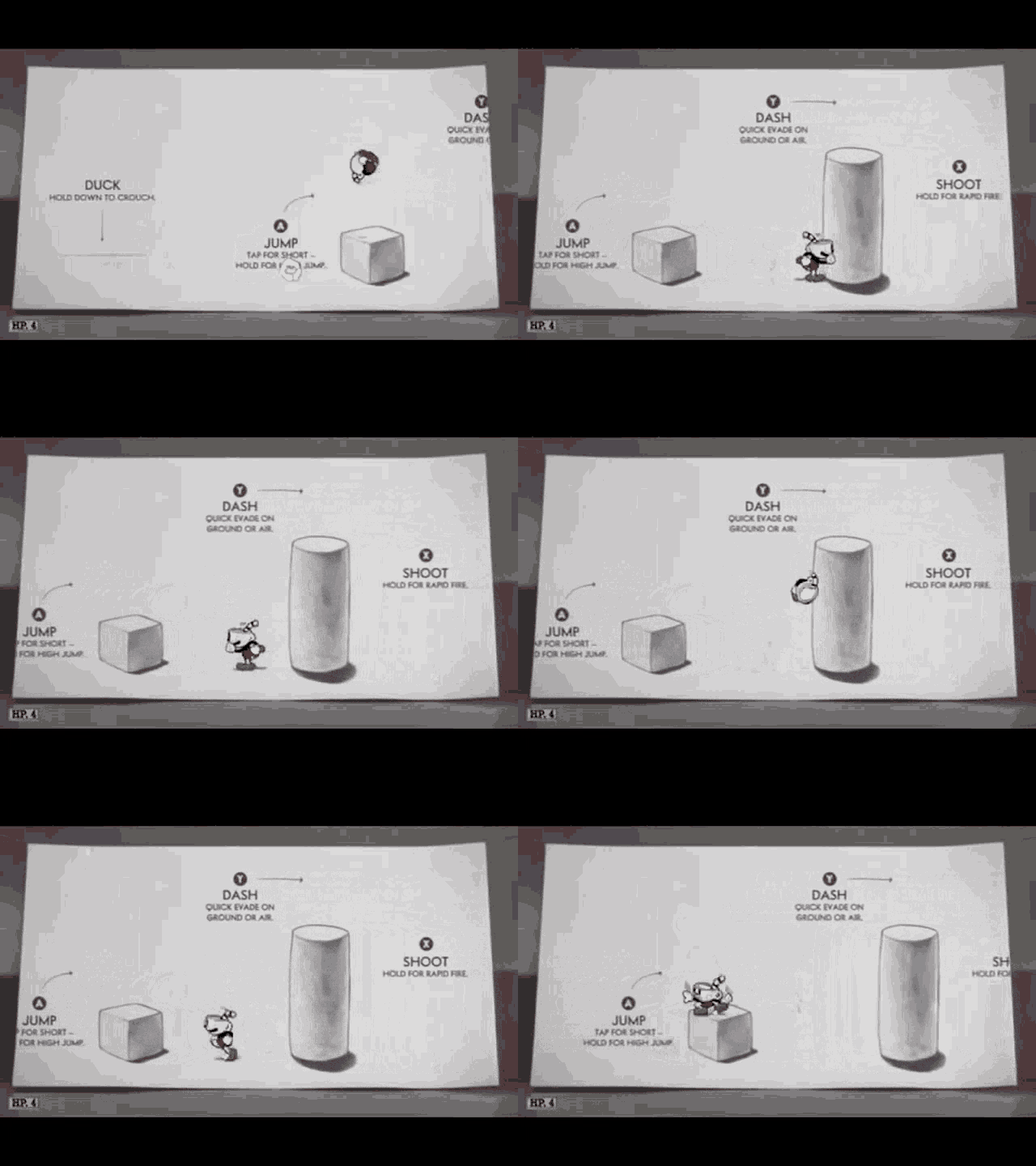
A mobile player and a Steam player arrive at your first screen having lived completely different lives up to that moment.
The mobile free-to-play player has paid nothing. They tapped an install button, maybe saw an ad, and now they are giving you seconds to make a case before they leave.
That world is downstream of that pressure: shorten time to first win, remove friction, hook them before they’re gone. The argument has to land in real time because nothing has been committed.
The Steam player closed the deal before they ever launched the game. They watched a trailer. They read reviews. They looked at the price and decided it was worth it. By the time your first screen appears, the transaction is done and the money is spent.
That single difference reorganizes everything. The mobile designer is selling. The premium designer is confirming.
And confirmation is a harder, quieter job than it looks, because the player is not asking “should I buy this?”
They are asking something you can’t see and they will never type into a review box: was I right to trust this?
Fail that question and you don’t get an uninstall: You get a refund, a negative review, and a player who quietly closes the game and never tells you why.
The Two-Hour Window Is a Design Document
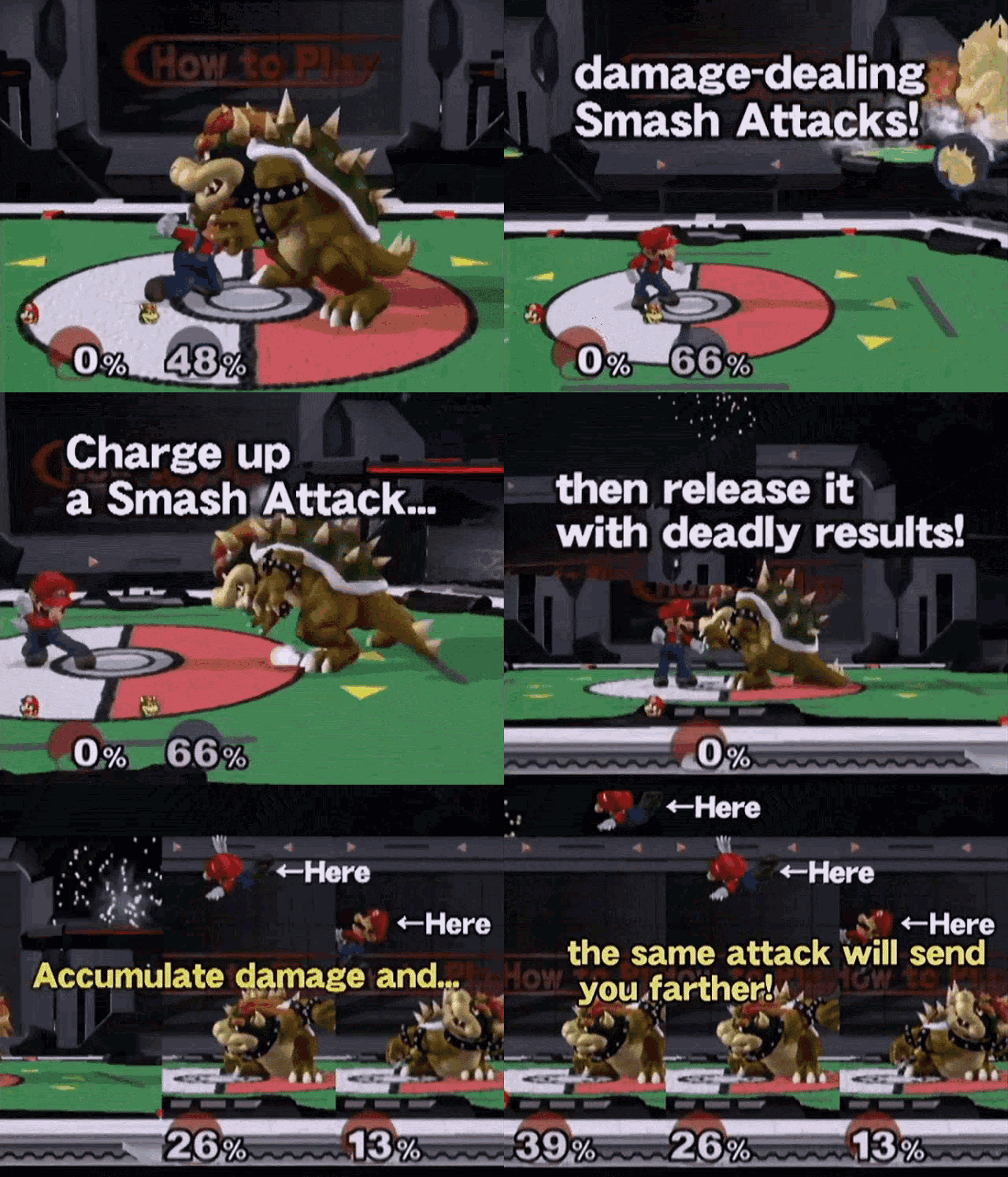
Steam lets a player refund any game within 14 days of purchase, as long as they have under 2 hours of playtime. Valve frames this as removing risk from buying, not as a way to get games for free.
In practice it has quietly rewritten how premium PC games open, and most studios still design as though it isn’t there.
Two hours is not a lot of room.
It means your opening cannot lock the core experience behind a long tutorial or an extended cutscene.
A player hits the 90-minute mark and still hasn’t touched the thing that makes your game worth owning. Now the policy is working against you.
The most-cited reasons players trigger refunds are exactly this: unskippable tutorials, prolonged exposition, a core loop that arrives too late.
The rental-era developers learned a version of this years ago.
Players expect to try a game and return it quickly. So you compress the game’s identity into early play. The difference for a premium release is the goal.
You want genuine confidence, not a false first impression. You are not tricking the player into keeping the game. You are showing them, fast, that the purchase was sound.
There’s a second, sharper edge to this. Short-playtime negative reviews cluster around onboarding failures.
A player leaves in under two hours and writes a review. They cite confusion. Unclear first-session design. A control that didn’t behave as expected. A door that wasn’t readable as a door.
That one failure becomes public and permanent. Every future buyer sees it in the reviews before they decide. The refund costs you one sale. The review costs you the ones you’ll never see.
So treat the two-hour window the way Adrian treats D1 retention. It is the structural deadline the entire opening is built against. The question on both platforms is the same: what does earning the sale look like here? On mobile, you earn it before they pay. On Steam, you earn it after.
The Failure That Built Your Trust

Here is where the two platforms invert most cleanly.
On mobile, an early failure is a crisis and he data is brutal: players who fail in the first 60 seconds churn at dramatically higher rates, and mobile FTUE design goes to real lengths to prevent early loss entirely.
A loss in the first minute is a leak in the funnel.
On premium, the first failure is an opportunity, and avoiding it is the mistake.
A player who paid for a game that promises challenge expects to lose sometimes. That’s part of what they bought. A well-designed early failure builds trust instead of eroding it, but only if you get three things right.
Timing: The player has to have enough time to care before they lose. On mobile the research points to a window around three minutes; for premium games with longer sessions, that window stretches. The loss has to land after investment, not before it.
Framing. The failure has to feel fair. “You died” teaches nothing. “The attack came from the direction you weren’t watching” teaches everything. The player should be able to reconstruct, on reflection, exactly why they lost and what they’ll do differently. That reconstruction is the lesson.
Recovery: Retry has to be cheap. Fast checkpoints, fast respawns, a short loop back into the learning zone. Failure should feel cheap to retry, not punishing to endure.
Get those three right and the first loss does something no first win can do: it tells the player the game is real, the stakes are real, and their competence is going to matter. A guaranteed early win flatters the player. A fair early loss respects them, and respect is what they actually paid for.
Over-Tutorialization Is the Premium Killer
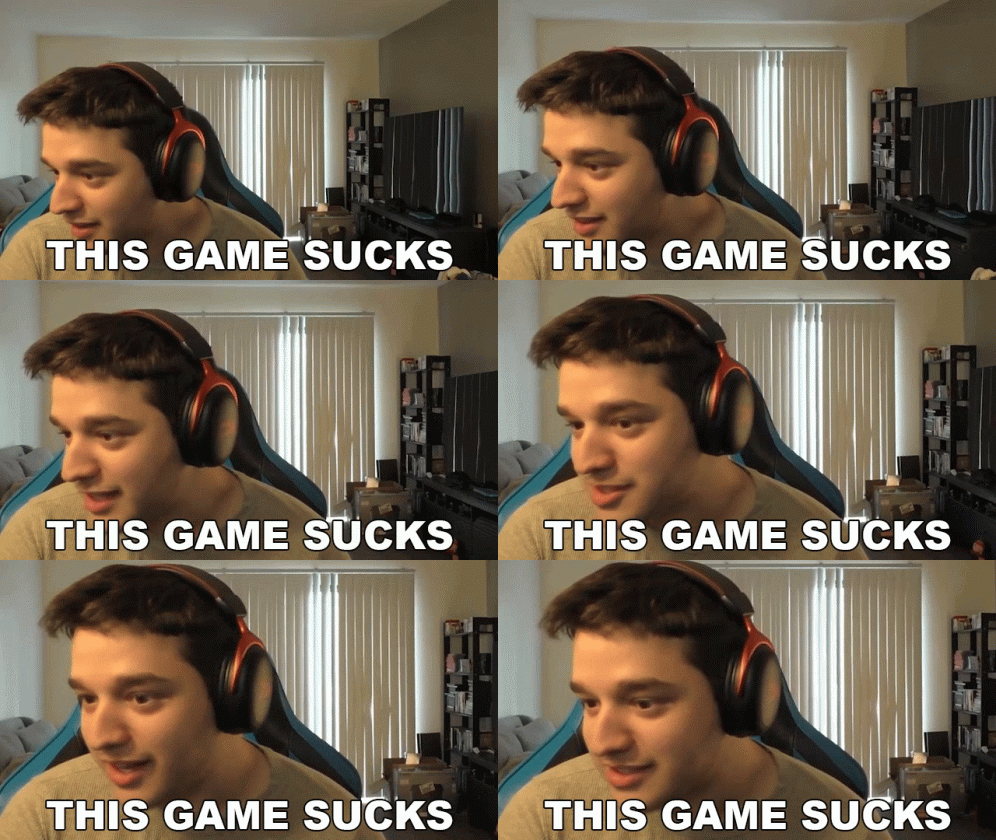
Mobile’s cardinal sin is asking too much before the player is ready.
Premium’s is the inverse: refusing to let a paying player play.
The most damaging tutorials in premium games are the ones that treat the player as incompetent.
Locked movement.
Pop-ups explaining the most basic control.
A refusal to let the player experiment with the thing they just bought specifically because they wanted to play it.
If your FTUE hasn’t let the player actually play within the first five minutes, you’ve told them something: Structurally, you don’t trust them.
Premium players, and PC players especially, self-select as experienced and have very little patience for being handled.
There’s a real psychological reason this lands so hard. Every player arrives with a mental model built from the trailer, the genre, the reviews, their own history. When the game conflicts with that model, players rarely adjust the model; they conclude the game is broken, or confusing, or not for them.
A player buys a dark fantasy RPG on the strength of its trailer: It opens into a 20-minute resource-management tutorial. They haven’t been lied to. But they’ve been misled about the texture and pace of what they paid for. And the first thing to wobble is the very confidence that made them buy.
The fix is not less teaching. It’s better teaching, in a specific order.
Teach through play, not before it: The pattern that holds up across the research is teach-test-twist: introduce a mechanic in a safe context, require it to proceed, then combine it with something familiar under mild pressure. That loop builds real competence instead of the illusion of it. Premium games can afford to layer this more than mobile can. Introduce one verb, let the player own it, then build the next on top.
Disclose progressively instead of front-loading: The temptation in a premium game is to show all the systems at once to prove depth. It does the opposite. Working memory holds somewhere between three and seven things at a time; push past that and the earlier information falls out. UI should appear when it’s needed. Mechanics should unlock as the player advances. Narrative context should arrive at the moment it changes what the player wants to do, not before.
Teach diegetically instead of modally: A pop-up that pauses the game to explain something interrupts flow and signals distrust. Level geometry that guides you toward the path, environmental cues that show what’s interactive, an NPC who demonstrates a mechanic through action: these teach without announcing themselves as a lesson. The strongest premium onboarding is the kind the player never notices was onboarding.
And give experienced players a way out: Every long sequence needs a skip, or better, detection that the player already knows the genre. A skip should land them in a viable state with the core mechanics accessible, not in a punishment tier.
Ask the fighting-game question: “have you played this before?” Forcing a veteran through a basic-controls tutorial isn’t safe. It’s the fastest way to disrespect the exact player most likely to evangelize your game.
Sunk Cost Is Not a Plan
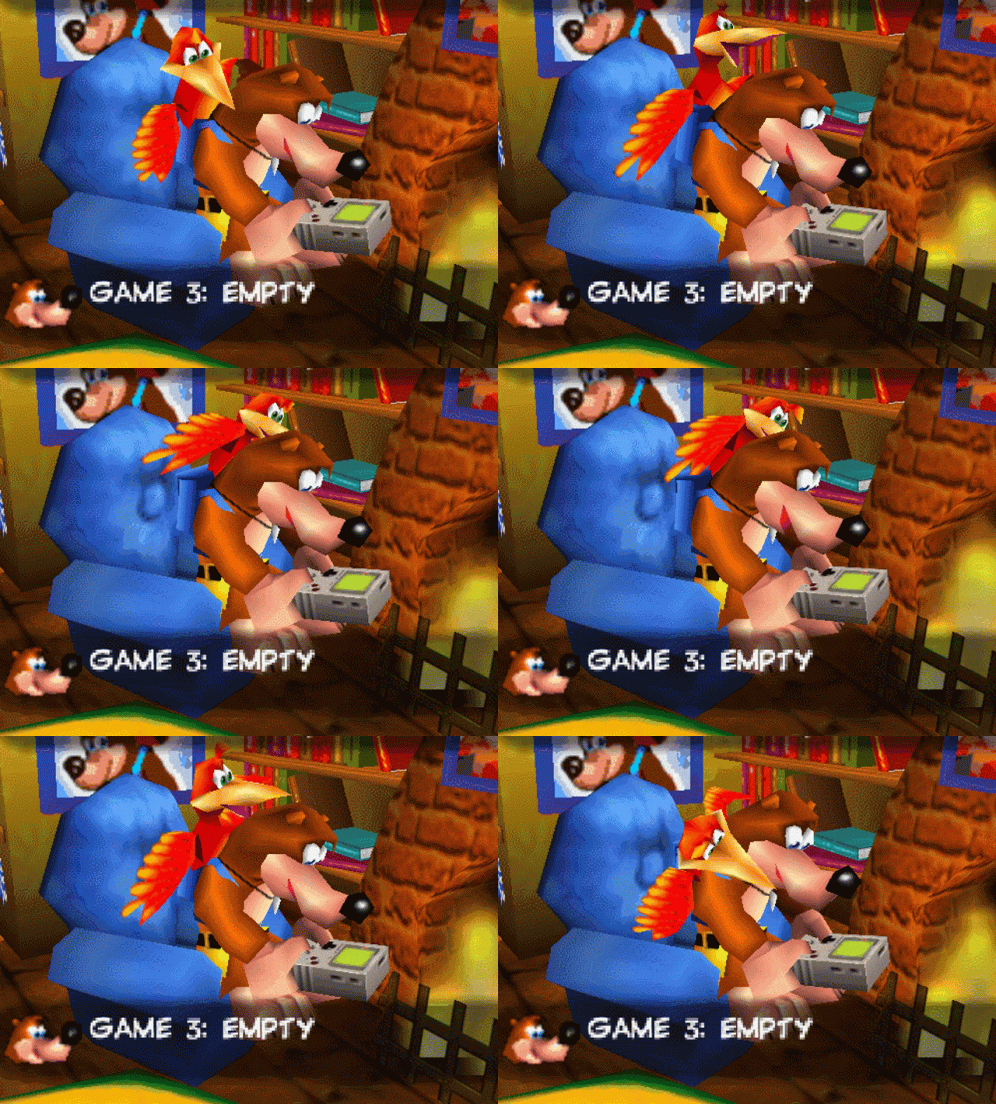
The comfortable assumption in premium design is that paying players stay longer because they’ve already spent the money. The research complicates that more than studios want to admit.
People are more willing to invest time in a game they believe is premium, yes. But sunk cost alone produces resentful players, not loyal ones. They’ll grind through the first session out of stubbornness, out of “I paid for this,” and they will leave the moment frustration crosses the threshold of what the money was worth.
A premium FTUE that leans on sunk cost as its retention mechanism is built on a fault line. The player finishes the session, never comes back, and you’ve converted a sale into a churn statistic that looks like success on the purchase report and failure everywhere that matters.
The stronger driver isn’t financial at all. It’s identity. The player bought the game because it matched something they believe about themselves: that they’re the kind of player who can handle a brutal platformer, who wants the deep systems game, who reads the lore.
A good premium FTUE reflects that identity back at them inside the first few minutes. It doesn’t say “you spent money.” It says “you were right about who you are, and this is the game for that person.”
That’s the difference between a player who tolerates your opening and a player who’s relieved by it.
Instrument It Like a Funnel

Premium designers tend to under-instrument FTUE because there’s no monetization event tied to onboarding the way there is in free-to-play. That’s a mistake. The opening is still a funnel, and you should be able to see where it leaks.
Put events on it: tutorial start, each mechanic gate, first death, first quit, first session end, day-one return. Heatmap where players idle and where they die in the opening area, because that’s where the design problems live and where text logs go quiet.
The metric that matters most is time-to-fun: the elapsed time until the player first performs the core verb that defines your game. The shooting. The building. The exploring. The crafting.
For a premium action game, if that number runs past ten minutes, every second before it deserves an argument.
Session completion rate is the other one to watch. Industry practitioners generally treat 70% as the threshold for a healthy opening session. Below 30% is a redness in the chart that means the opening needs to be rebuilt, not tuned.
None of this is exotic. It’s the same funnel discipline Adrian’s side of the industry has practiced for years. Premium just got out of the habit of applying it because nobody was charging at the door.
The Reframe
Mobile FTUE is seduction. Premium FTUE is delivery.
Both require deep respect for the player’s time. They just express it in opposite directions. The mobile designer respects the player by being fast, because the player hasn’t committed and every second is a chance to lose them.
The premium designer respects the player by being trustworthy, because the player has already committed and the only thing left to do is prove the commitment was sound.
That’s the whole difference, and it runs deeper than platform. It’s two different relationships to the same opening.
Mobile meets a stranger and has to manufacture a reason to stay.
Premium meets someone who already chose you and has to confirm the choice was right.
Everything else, the time-to-fun targets, the tutorial philosophy, the designed first failure, the refund window versus the D1 cliff, is just those two contracts working themselves out in the specifics.
Get the premium side right and the receipt holds. Get it wrong and the player has fourteen days and two hours to take it all back.
But here’s what should bother you more than any single broken FTUE. Both contracts are hard. Both reward studios that take the opening as seriously as they take the next forty hours. And almost nobody is being taught either one.
I opened with a build whose FTUE didn’t exist, made by a studio that was never shown how to build one. That studio isn’t an outlier. The stretch that decides whether a player ever sees the rest of what you made is the part the entire training pipeline skips.
Mobile or premium, seduction or delivery, the lesson is the same: the opening is not the thing you build before the game. It is the game’s first argument for its own existence.
Design it like you believe that, because your player is deciding whether to believe it too.
Abbas Saleem is a Principal Consultant at Llama & Griffin, advising game studios, streaming platforms, and investment funds across six continents. He writes The Pattern Recognition: gaming industry intelligence 12 to 24 months before it becomes consensus.