
Glitch Productions Is Building Games for 2027 and Beyond
The Industry Spent Summer Fest Wishlisting Dads. An Australian Studio with 18mn YouTube subscriber is Building for the Ten-Year-Olds Whose Taste Is Hardening Right Now.

TL;DR
Glitch is building a games division from scratch, with multiple titles already in planning. Behind it: eighteen million YouTube subscribers who have already proven, with merch dollars and theater tickets, that they will pay for whatever Glitch ships on any platform.
Their first move cost roughly nothing. Glitch Karts, released November 2025, is a reskin of Nightmare Kart, an existing indie kart racer by Lilith Walther at LWMedia, deployed as a Black Friday merch promo.
The Amazing Digital Circus; The Last Act grossed $20.24M domestic in four days, with $7.5M committed in presales before opening night. Pre-validated demand at theatrical scale, and demand outran supply: France pulled 157,000 admissions from 500 capped screenings. That presale mechanism is exactly what a Glitch games launch would look like.
Gameoverse is the keystone nobody is reading correctly. Ross O’Donovan’s series, voiced by a cast pulled directly from gaming creator culture, set inside a video game world. The show is the demand funnel. The game is the harvest.
The core audience is ten to thirteen years old. That is not a niche; it is the formation zone. The age where taste hardens and loyalties last thirty years. These are the buyers of 2030, 2035, and 2040. The industry spent Summer Fest getting wishlisted by the audience it already has.
A note for readers landing here without reading the earlier piece: Glitch Productions is an independent Australian animation studio that has spent eight years building shows like The Amazing Digital Circus and Murder Drones into a fan ecosystem with a fully audience-funded production model.
Eighty percent of Glitch’s production funding comes from merchandise, every show is free on YouTube, and the audience is not the customer. The audience is the broadcaster.
The Game Most of the Coverage Missed
In November 2025, Glitch released Glitch Karts. Free browser-based 4-player racing. Pomni from The Amazing Digital Circus, Uzi from Murder Drones, Mel from The Gaslight District, and Gwen from Knights of Guinevere.
Available at glitchkarts.com during the Black Friday merch sale, with a time-trial competition where the winner got a golden Pomni statue.
Glitch did not build the game. They did not commission it. They did not stand up a games division.
They reskinned Nightmare Kart, an existing indie kart racer made by Lilith Walther at LWMedia. The whole thing functions as a promotional vehicle for the Black Friday merch drop, which funds the next show.
Their first foray into games cost them roughly nothing and proved the model works in interactive.
What the Cinema Weekend Actually Proved
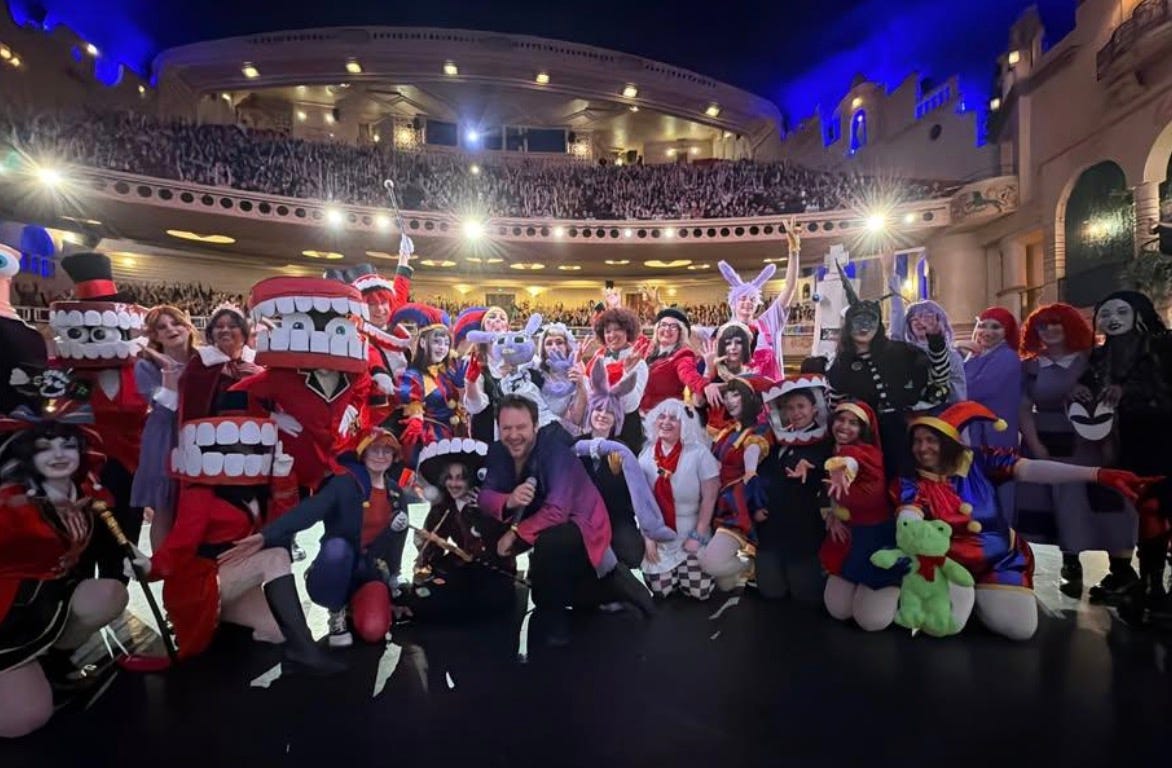
The Amazing Digital Circus: The Last Act opened at $7.88M, number one at the US box office, and finished its four-day theatrical run with $20.24M domestic and $20.65M worldwide, in a fifteen-day exclusive window before the whole thing drops free on YouTube. Fans emailed theater chains and asked them to screen it. No traditional studio was involved at any point.
What I did not cover is the part that matters most for games: demand outran supply.
France pulled 157,000 admissions from just 500 capped screenings. Some American theaters were running a single daily showtime. The community wrote the distribution plan, and the theaters could not print seats fast enough. This was not a release that found its audience. This was an audience that had already assembled, waiting for a release to buy.
I spent twenty-five years in this industry and I have never watched a release cycle that looked like that.
The $7.5M Number That Actually Matters
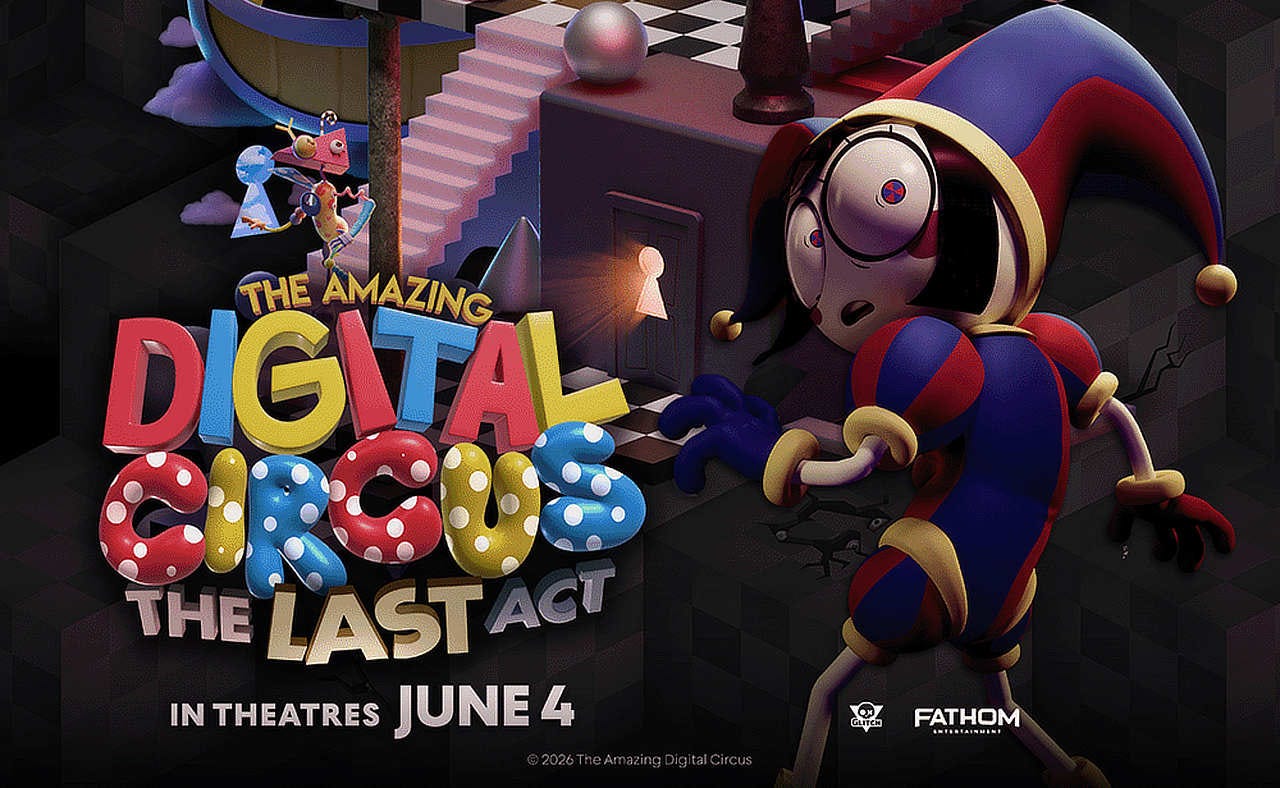
The headline figure is twenty million in four days.
The structural figure is the presale number: $7.5 million in tickets committed before opening night, breaking the presale records of Fathom Entertainment.
Fathom is the event-cinema distributor that handles limited theatrical runs for concerts, anime films, and fan events. Their presale records are set by properties with decades of theatrical history. A YouTube studio just broke them.
Seven and a half million dollars committed to a YouTube animation finale before reviews, before word of mouth, before opening night had happened. The community paid for a product sight unseen.
That is pre-validated demand at theatrical scale, and it is exactly the signal Glitch already uses internally to greenlight shows. The cinema run just extended the mechanism into a new medium. The same audience that funds the next animation episode by buying plushies just funded the next theatrical experiment by buying tickets in advance.
A Glitch games Kickstarter or premium Early Access launch would look exactly like this. The audience commits before the product ships. The development is derisked before a line of code is written.
The Core Glitch Audience
Here is the demographic fact underneath everything above.
The core Glitch audience is ten to thirteen years old. The reflex read on that number is “niche kids content.” The structural read is the opposite.
Ten to thirteen is the formation zone: the age at which taste hardens and loyalties are built that last thirty years. The franchises you love at twelve are the franchises you are still buying at forty. Ask anyone in their thirties and fourties still preordering Zelda.
These kids are the buyers of 2030, 2035, and 2040. Every Summer Game Fest trailer this month was aimed at adults who formed their loyalties two decades ago: legacy IP, sequels, reboots, nostalgia as the primary marketing mechanism. The industry spent the week getting wishlisted for 2027 by people whose favorites were settled before TikTok existed.
Sit with a kid in the formation zone and the blockbuster announcements do not land. The hooks that work on adults in their thirties generate a polite nod or a blank stare. Masters of the Universe is exactly the product the industry builds: known IP, proven fanbase, deep feelings, limited recruiting power. The kid demographic it needed is not a growing one.
Glitch owns the demographic that is. Eighteen million subscribers, concentrated in the exact window where gaming loyalties get written, who already know every line of dialogue, have already bought the plushies, and have already paid theatrical prices for content they could watch free.
They are waiting for someone to give them a game. The studio they trust is about to.
This is why Glitch might be the future of game development, and not in the soft thought-leadership sense. In the literal sense: they hold a direct, monetizable relationship with the cohort whose purchasing decisions will define the industry’s next two decades, and no games publisher has anything comparable.
The ENA Precedent Glitch Already Watched
Eighteen months before any of this, an adjacent indie animator ran the exact same play in games and proved it works.
ENA: Dream BBQ is a surreal animated YouTube series by Peruvian creator Joel G. In March 2025, he turned episode 4 of ENA into a free Steam game instead of a traditional animation release.
By the end of 2025, Dream BBQ was the 4th highest-rated Steam game of the year, with roughly a million Steam owners, eighteen thousand Overwhelmingly Positive reviews, and no publisher behind it.
The Glitch fandom noticed in real time. When Glitch posted a job listing for a games-focused Head of Development, YouTube commentary referenced ENA Dream BBQ explicitly: “It proves that indie animation fans will play games on things they like too.” The hire followed shortly after.
This is what asset-light, audience-pulled expansion looks like. You do not commission market research. You wait for an adjacent creator to run the experiment for free, watch their numbers, and only then commit the budget for hiring the people who will run your next move. That is bench-building done right.
The Gameoverse Keystone

In January 2026, Glitch announced Gameoverse, a new original series from Ross O’Donovan, known as RubberRoss of Game Grumps, one of the longest-running gaming comedy channels on YouTube. The pilot dropped in May 2026. The show is set inside a video game world.
The voice cast is built from gaming creator culture: Arin Hanson, JSchlatt, Michael Cusack, alongside animation veterans Erica Lindbeck and Chris Sabat.
Most coverage filed this as Glitch’s next IP launch. Read the move structurally and it is something much more deliberate.
Gameoverse is not a Glitch show that happens to be games-adjacent. It is the pipeline for the Glitch game that has not been announced yet.
The audience for an animated series voiced by gaming creators about a video game world is structurally indistinguishable from a Steam audience. Every viewer is already a self-identified gamer. Every episode is, in effect, an extended trailer for the game version of itself. The pre-validation is happening in real time, on YouTube, for free.
By the time Glitch ships a Gameoverse game, they will already know exactly how many people will buy it, because those people have been watching the show that is functionally a demo.
Compare this to how legacy studios approach games-from-IP. A studio greenlights a show. The show succeeds. Two years later, a separate division decides to greenlight a game adaptation. They commission market research to figure out if the show’s audience will buy the game.
The answer is usually “we are not sure.” They take development risk anyway, ship, and learn the answer expensively.
Glitch is running the inverse. The show is the market research.
The audience is paying for the research by watching, sharing, and buying merch. The game gets built on top of an audience that has been demonstrating willingness-to-pay for the entire production run.
This is where Olan Rogers fits. In January 2025, Glitch hired Rogers as Head of Development, a title he confirmed himself in a post-departure Instagram post. Rogers built his own audience through long-form YouTube animation before creating Final Space, an adult animated science fiction series that ran on TBS and Netflix between 2018 and 2021.
His LinkedIn lists the role as January 2025 to May 2026; he has since departed. The departure matters less than the window.
Rogers’s twelve months at the studio cover exactly the period during which Gameoverse was greenlit, the pilot was produced, and the games pipeline was architected.
Whatever Glitch ships in interactive over the next eighteen months was scoped while a games operator was in the seat.
The show is the demand funnel. The game is the harvest. And the harvest is now in motion. Remember that in November 2025 they had not stood up a games division.
They are standing one up now, from scratch, with multiple titles in planning. The games industry is still writing pitch decks about IP they hope will become hits, while Glitch is producing hits that are structurally pre-attached to games already in the pipeline.
The Fan Games Already Running the Playtest
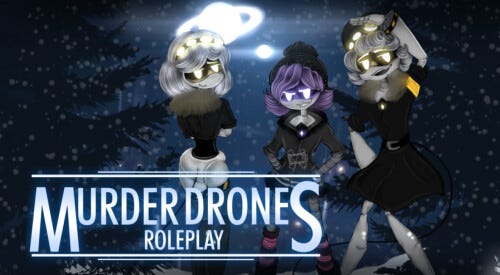
There is an entire directory of community-built fan games across Murder Drones and The Amazing Digital Circus. Multiple standalone titles. Windows, Mac, Linux, mobile. Visual novels. Platformers. Narrative RPGs. The TADC cast has streamed themselves playing a fan-made game.
The audience is not waiting for Glitch to make games. They are already making them, in the exact genre clusters (visual novel, narrative RPG, character-led adventure) that any competent games division lead would read as the design brief.
The Reframe
The long piece argued the audience is the broadcaster. The cinema weekend argued the audience is also the box office. The formation zone argues something bigger: the audience is the future installed base.
ENA proved indie animation fans will play games on things they love. The Last Act proved they will pre-commit theatrical-scale dollars to studios that respect them, in volumes the supply could not meet.
Gameoverse proved Glitch will not even need to commission market research; the show is structurally a pre-launch demo for the game it will become.
Glitch is not entering the games industry. They are arriving with the one asset no publisher can buy, license, or acquire: a direct relationship with the cohort whose taste is hardening right now and whose purchasing decisions will define the next twenty years of this business.
The games industry spent Summer Game Fest talking to the audience it already has.
Glitch is already talking to the audience everyone will need.
The relationship is the platform. The formation zone is the moat.
By the time the games industry catches up, those kids will be twenty, and they will already know whose games they buy.
Abbas Saleem is a Principal Consultant at Llama & Griffin, advising game studios, streaming platforms, and investment funds across six continents. He writes The Pattern Recognition: gaming industry intelligence 12 to 24 months before it becomes consensus.
The thing the piece nails is that this isn't an IP problem; it's a relationship problem. A publisher can acquire a studio, license a character, or throw nine figures at a marketing campaign. They cannot buy eight years of trust with an audience that was ten years old when the relationship started. That's not a gap you close with a cheque. It accrues, or it doesn't exist.