
Glitch Studios: How Two Brothers in a Sydney Bedroom Built the Operating System for Gen Alpha Entertainment
421 million views on a pilot. $1.7 million on a Kickstarter (fourth biggest in comics history). Netflix and Amazon distribution in 240 countries. Disney’s most acclaimed showrunner of the last decade

TL;DR
421 million views on the pilot. $1.7M Kickstarter. Netflix and Amazon distribution in 240 countries. Two brothers in a Sydney bedroom built it. Nobody in legacy media was watching.
Eighty percent of production funding comes from merchandise. The audience is not the customer. The audience is the broadcaster.
Streaming deals are bonus distribution, not survival. Every show stays free on YouTube. The studio owes no network anything, because the network is the fandom.
This is why Dana Terrace works there now. Disney compressed The Owl House‘s third season into three specials because it did not “fit the brand”. Glitch offered no notes, no brand review. Her next pilot hit 10 million views in five days and was greenlit on merch sales.
The diagnostic for games: if you are unwilling to let community revenue flow back into production decisions, you are not building a Glitch model. You are building a marketing campaign.
A note for new readers. Some sections reference frameworks from earlier pieces in this newsletter (story ROI tiers, hub-native versus product-native studios, the Casino Economy thesis on Generation Alpha). Each framework is explained inline the first time it appears. Returning readers will see the threads. New readers will not need them.
The Phone Call
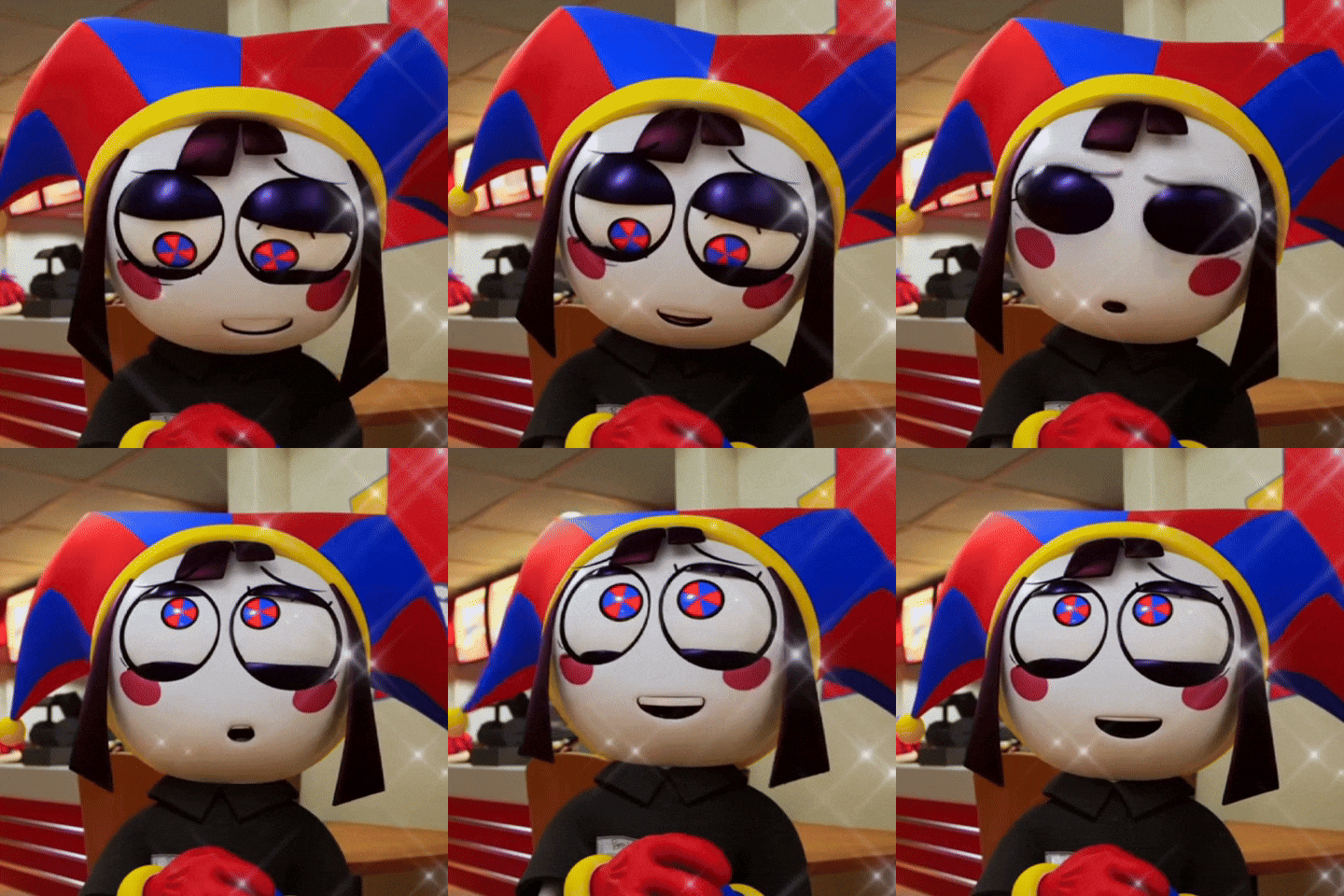
A founder of a mid-sized publisher called me last quarter. He had spent the morning watching his teenage daughter and her three friends sit on the floor in his living room, all on separate phones, all in the same Discord server, theorizing about an episode of The Amazing Digital Circus that had dropped the night before. He wanted to know how to manufacture that for his upcoming game IP.
I am a principal consultant who works with game studios globally. I have been in this industry for over 25 years. The most common conversation I have right now is some version of this one.
He had a marketing budget. He had a community team. He had a publishing partner “investing heavily in social.” He wanted a playbook.
So I asked him a different question: “How much of your production cost are you willing to put on your audience’s shoulders before you ship?”
Long pause.
“None of it,” he said. “That is what publishing is for.”
“Then you cannot have what Glitch has.”
I have watched this conversation play out in consulting constantly over the last six months. Studios are noticing the lightning without understanding the storm system that produces it. The storm system is the funding inversion.
What Is Glitch Productions
For readers new to the studio, the short version: Glitch is an independent Australian animation company founded in 2017 by two brothers, Luke and Kevin Lerdwichagul. Luke started making Super Mario 64 machinima videos in 2009 when he was twelve years old. Kevin joined as the operational architect in 2016.
Eight years later, they have launched Murder Drones, The Amazing Digital Circus, Meta Runner, The Gaslight District, and most recently Knights of Guinevere. All of this while maintaining non-exclusive distribution deals with Netflix and Amazon Prime Video.
They have never taken outside investment. They have never been acquired. They publish every episode free on YouTube.
They are the most important animation company most people over 25 have never heard of; and the audience that has heard of them treats them with the kind of loyalty that legacy studios spend hundreds of millions trying to manufacture.
Two Shows, Same Tier, $400M Apart
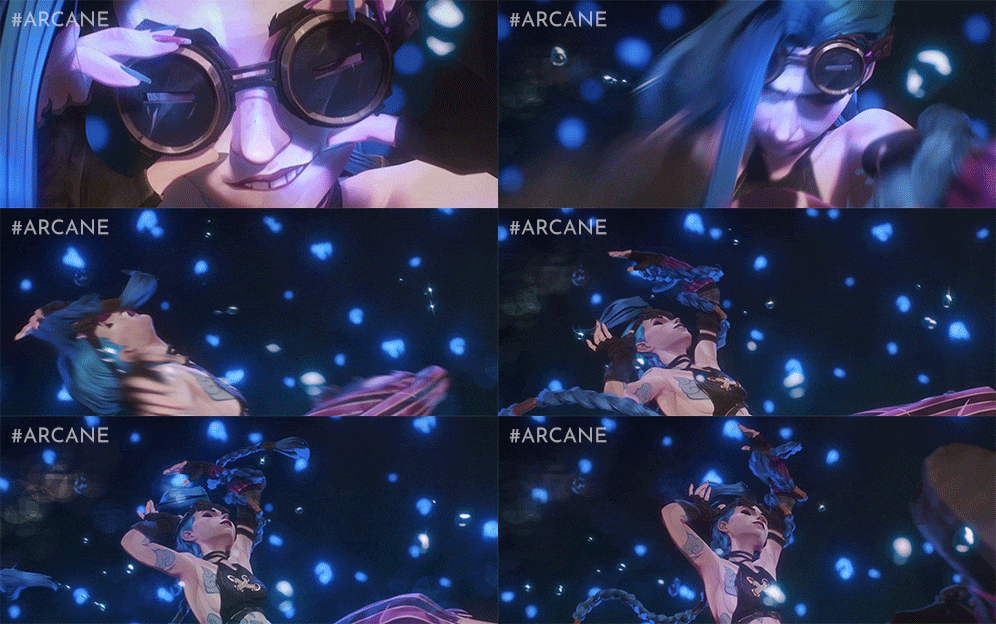
In the games industry there is a useful comparison that does not exist yet in animation discourse. Riot Games spent $250 million making Arcane, the most expensive animated series ever produced, hoping it would convert TV viewers into League of Legends players. It did not. League’s player count barely moved.
Riot lost roughly $142 million on the bet.
The Same year, Bethesda licensed Fallout to Amazon, spent zero dollars of their own money on the show, and made roughly $80 million when the existing games caught the spike.
One studio funded the bet. The other studio harvested it.
Now stack Glitch’s flagship show against the same tier.
Arcane. Prestige serialized animation, the structurally hardest tier of storytelling to make money on. $250M production cost. Twelve episodes. League player count barely moved. Net loss of $142M.
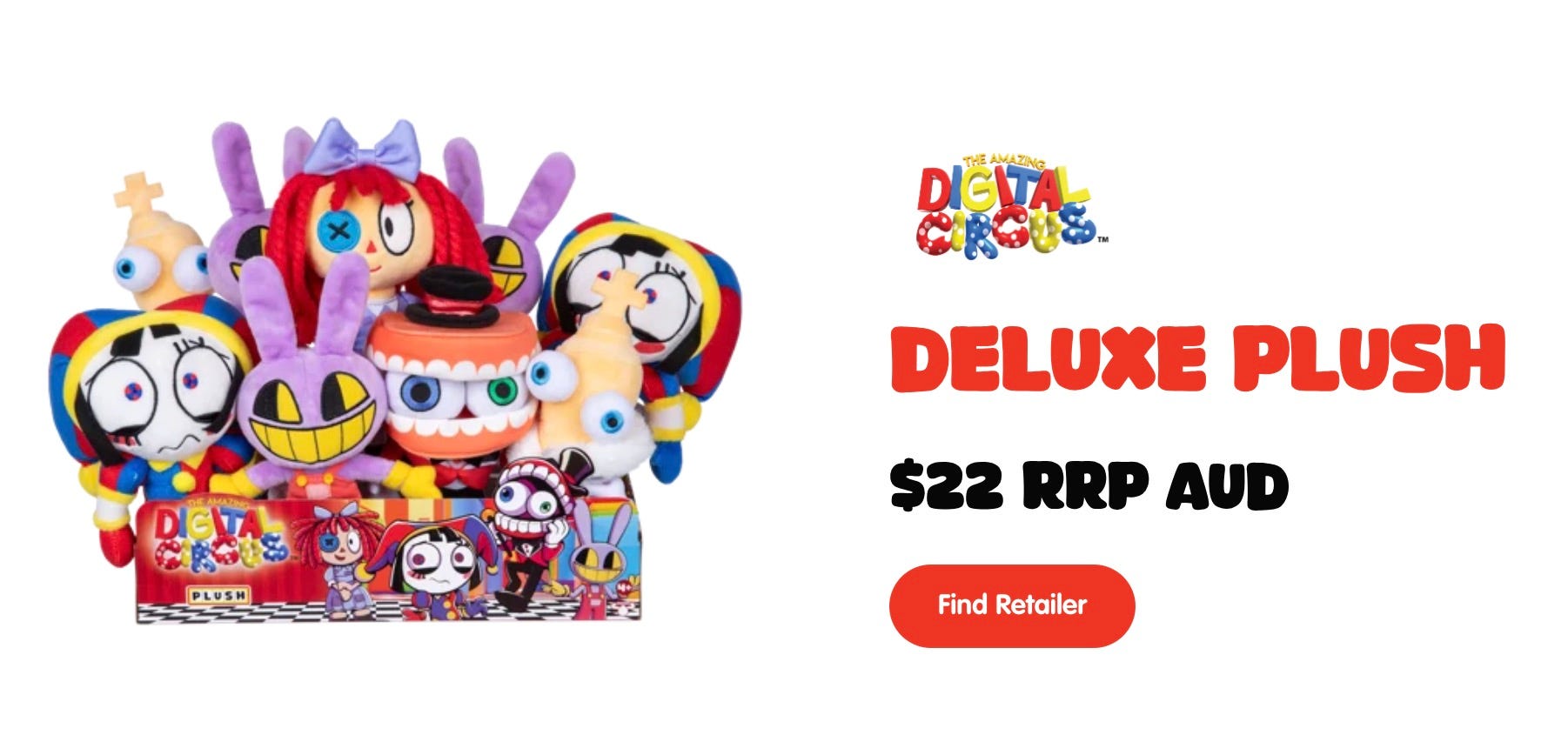
The Amazing Digital Circus. Same tier of prestige serialized animation. Pilot funded out of merchandise revenue from a YouTube channel founded by two brothers in their bedroom. 421 million views on the pilot alone. Netflix non-exclusive distribution in 240 countries. TikTok hashtag at 1.7 billion views. Subscriber count doubled in two weeks.
The production costs are not directly comparable; Glitch does not publish detailed budgets. What is comparable is the structural position. Both shows are doing prestige serialized animation aimed at a young adult audience that values lore and emotional complexity. One bled out at $250M because the studio carried the risk. The other became infrastructure because the audience carried it.
In Glitch’s own words from a 2024 post: “80% of the funding of our shows comes from the merch we sell. It’s wholeheartedly what makes this all possible.”
Or as I told (Queen) Jo Redfern the other day… “Paw Patrol Money”. It’s like these kids were trained on the Paw Patrol and graduated into Glitch-stans.
That sentence reframes the entire entertainment economy. In the legacy model, the show exists to build the IP and merchandise is a downstream revenue stream after the fact. In the Glitch model, merchandise is upstream.
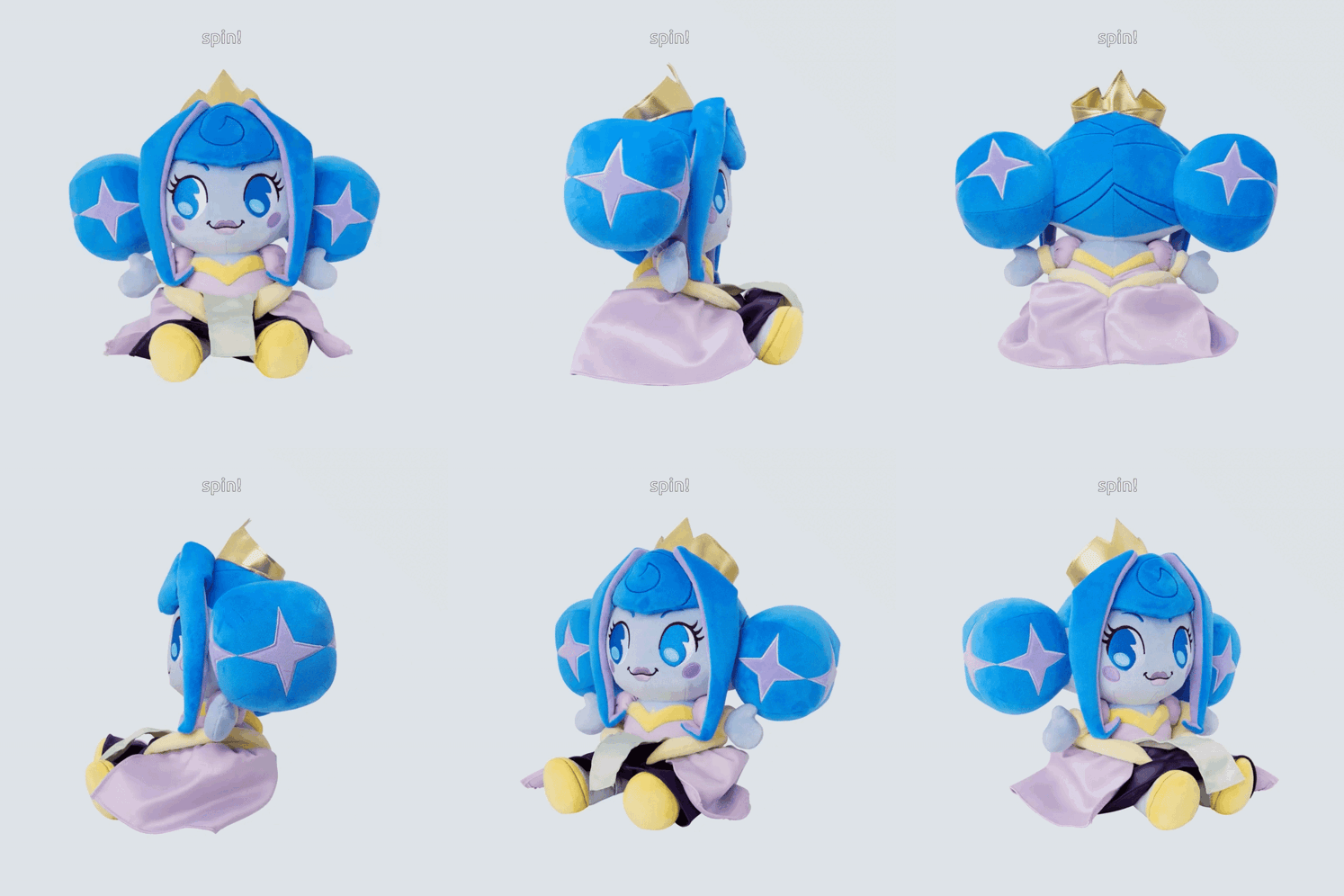
Fans buying a Pomni plushie or a Murder Drones hoodie are functionally co-producing the next episode.
This is not a clever marketing observation. It is the structural reason Dana Terrace works with them now.
The Disney Refugee Pipeline
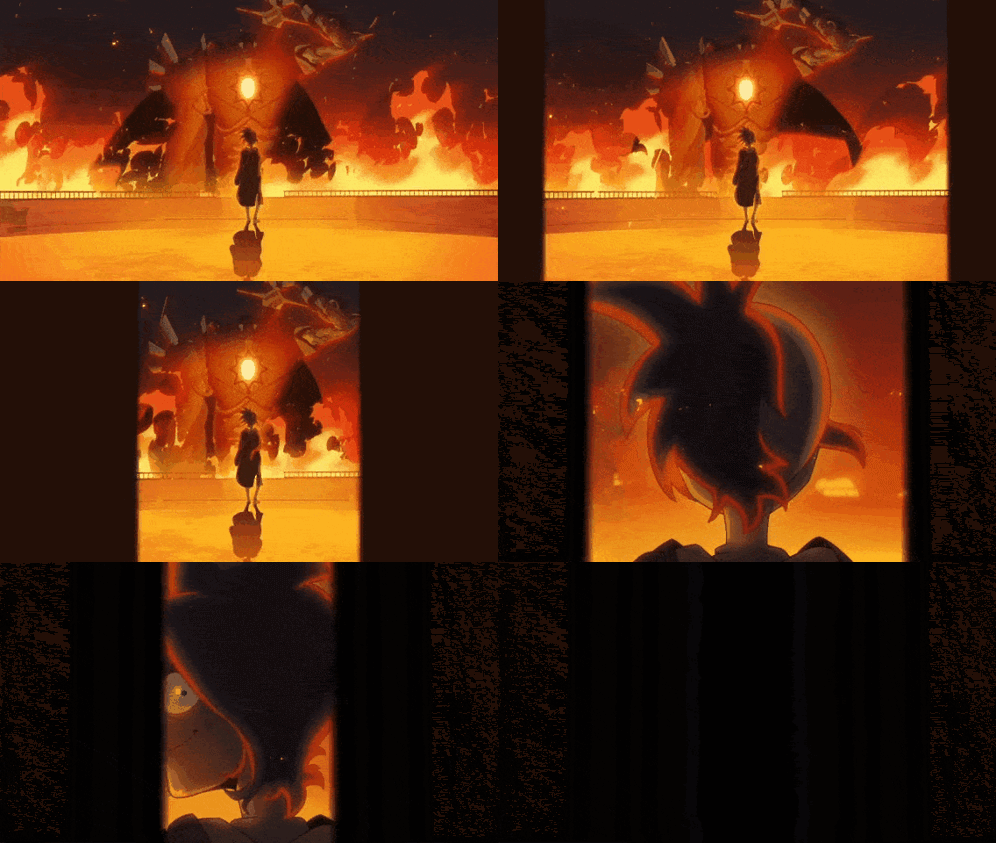
Dana Terrace is the creator of The Owl House, arguably the most critically lauded original animated series Disney Channel produced in the last decade. Disney compressed her third season into three specials instead of a full twenty episode run because the show did not “fit the brand.”
Terrace described her experience publicly: “Really grinds my guts, boils my brain, kicks my shins, all the things.”
Kevin Lerdwichagul, the CEO of Glitch, contacted her directly on social media.
The pitch was the antithesis of everything Disney had done. No executive notes. No brand consistency review. No demographic targeting mandate. Terrace later described the working relationship as “a collaborative student film.”
The pilot for her new show, Knights of Guinevere, a 2D sci-fi psychological thriller co-written with two Owl House veterans, dropped in September 2025 and amassed ten million views in five days.
It was greenlit for a full series based on audience response and merchandise sales.
The greenlight signal was not a focus group, not a network test, not a streamer’s algorithmic projection. The greenlight signal was the merch.
In late 2025, Terrace publicly called for fans to pirate The Owl House off Disney+ and cancel their subscriptions in protest of Disney’s announced integration of generative AI.
Her ideological break with the legacy system was complete.
The pattern extends: Ross O’Donovan brought his thirteen-year-passion-project Gameoverse to Glitch in January 2026, with a voice cast that blends animation pros like Erica Lindbeck and Chris Sabat with internet-native talent like JSchlatt and Arin Hanson. Tracy Butler brought Lackadaisy, a beloved indie pilot that had no sustainable funding model; Glitch is now an official co-production partner with an expanded six-episode season.
I have watched studios in consulting promise creators “creative freedom” while quietly retaining final cut, marketing veto, and IP rights in the contract. Nobody believes those promises after one project. Glitch’s promise is believable because the financial machinery that would normally produce interference has been disassembled.
Final Final Project: The Ecosystem Move
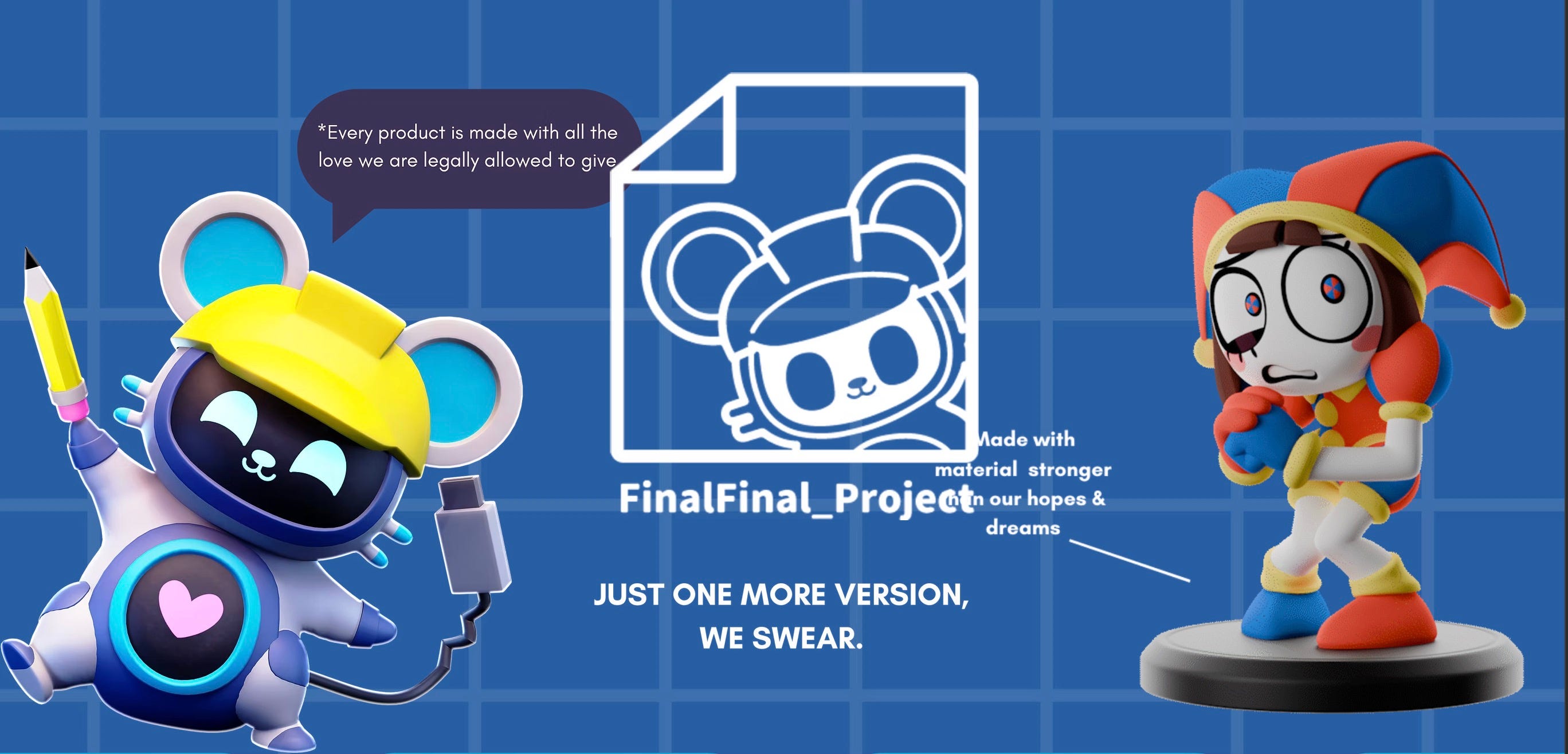
In 2024, Glitch disclosed they had quietly been operating their own in-house merchandise infrastructure company, . Rather than outsourcing fulfillment to third parties, they had built the rails themselves. Then they started offering those rails to other indie creators.
Lackadaisy was the first partner. Glitch handles merch design, manufacturing, and distribution. Revenue flows back into Lackadaisy’s production budget. The model is so structurally sound that Glitch could replicate it across the entire indie animation space, and they clearly intend to.
This is the move of a company building an ecosystem, not a content library. Games has no equivalent. The studio that figures out how to be both the production funder and the merchandise infrastructure for the indie games on it will be the next Glitch.
That studio does not exist in games yet. It is going to.
Why the Audience Showed Up in the First Place
There is a question that should be asked before any of the rest of this argument lands: Why did the audience decide to start paying for the show through merchandise at all?
Generation Alpha (those born after 2010) and the late half of Gen Z did not invent merch as a funding mechanism.
They chose it. It’s worth understanding why.
The shortest version: this is the first generation for whom YouTube is not a supplement to television.
It is television.
Among US digital video viewers under twelve:
97.3% are YouTube viewers. Nearly one-third of them identify online creators as role models, not athletes or actors.
YouTube’s own April 2026 culture and trends report quantified what Glitch had already intuited: 61% of 14-to-24-year-old animation fans say they enjoy watching indie animated series as much as or more than series from major studios;
63% of that age group watch animated series made for YouTube weekly or more.
This is the same audience I have been writing about in the Casino Economy series.
The thesis there was that Generation Alpha routes around extractive monetization through collaborative resistance rather than individual defiance. They do not refuse to spend. They choose where their spend goes, and they choose the place that gives them lore, ownership, and creator integrity.
The fans buying Pomni plushies are doing exactly what Gen Alpha does in Genshin Impact when they run guild grind strategies to bypass casino mechanics.
The behavior is identical. The object is different.
Glitch is what collaborative resistance looks like when it is given a positive object instead of a negative one.
What Makes Glitch Structurally Different
A useful distinction from earlier work on this newsletter: studios are either hub-native or product-native.
A product-native studio makes a game or a show and then tries to build a community around it after launch.
A hub-native studio builds the hub first (the channel, the Discord, the fandom) and ships products into a community that is already there.
Glitch is hub-native in the most precise possible sense.
Their hub is the YouTube channel and the Discord and the fandom; and every show they produce is a service to that hub rather than a standalone product hoping to declare a hub later.
SMG4 ran for over 700 episodes and earned the hub.
The Amazing Digital Circus, Murder Drones, Knights of Guinevere, and Gameoverse all launched into a hub that was already there.
That is the difference between Glitch and any major studio currently trying to manufacture community engagement for an existing IP after the fact.
The recently launched game Dispatch (which I wrote about in detail fanboyishly a few months ago) did something similar in games: weekly episode drops, Discord watch parties, and appointment viewing. It hit 220,000 concurrent players in week eight and roughly $30-40M in revenue with zero ad spend.
The model is real. Glitch was running it in animation a year before games caught up.
The Cracks Worth Watching
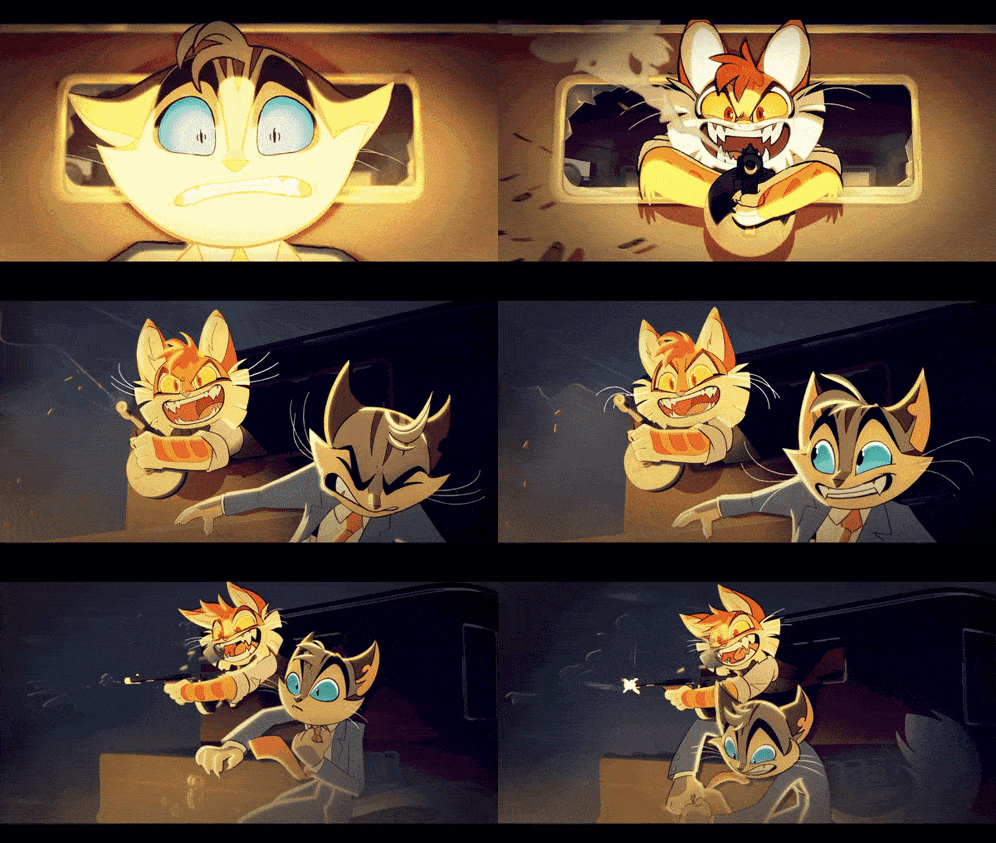
The Celeste Notley-Smith voice actress recasting controversy in 2024 exposed friction between Glitch’s community-first rhetoric and its internal management practices. A beloved voice actress was recast without notification, finding out when fans did. A second voice actor resigned in protest. Glassdoor reviews from former employees surfaced pointing to structural management issues.
This matters because a studio whose operating model depends on community goodwill cannot afford to behave like the legacy institutions it is disrupting. The fans are co-producers. Co-producers expect to be told when major creative decisions get made.
The bandwidth question is real too. Glitch is running seven or eight shows simultaneously across three production modes while sustaining the production quality that made The Amazing Digital Circus a global phenomenon.
The team has grown but not at the pace of the slate. This is the same scaling tension that broke a lot of indie game studios between 2018 and 2022.
And the audience that grew up with SMG4 is watching their show get progressively de-emphasized. Luke retired SMG4 in 2025 after nearly fifteen years and 700+ episodes. The community largely accepted it. But what Glitch owes the audience that built the foundation is a question that will not stop being asked.
The structural model still wins, because the alternative is the Disney model that produced Dana Terrace’s defection in the first place.
The Debatable Take
The games industry is not going to learn the Glitch model from Glitch.
They are going to learn it from the next Glitch, which will be a games studio, and it will happen between 2027 and 2028. The studios that adopt the model first will be the ones already operating hub-native around an existing community.
Everyone else will study the breakout case after the fact: They will miss the funding inversion underneath it, and try to manufacture the engagement without absorbing the structural cost of giving up control.
What I Help Studios With
When a studio asks me how to build a Glitch-style community engine for an existing game IP, the diagnostic I run first is the funding question.
If the studio is unwilling to let community revenue flow back into production decisions, we are not building a Glitch model; we are building a marketing campaign.
Those produce different outcomes, and most studios are sold the marketing campaign while believing they are getting the structural model.
The failures are almost always upstream of the launch, in the contract terms with creators and the governance structure of the IP.
The Reframe

Glitch did not figure out animation. They figured out that Generation Alpha has quietly rewritten the contract between creators and the people who love their work, and they were the only studio willing to honor the new contract end to end.
The new contract has four clauses:
The audience pays for what they love through merchandise rather than subscriptions.
Creators get genuine sovereignty because the financial machinery for interference has been removed.
Platforms become distribution partners rather than gatekeepers.
The community becomes co-producer rather than consumer.
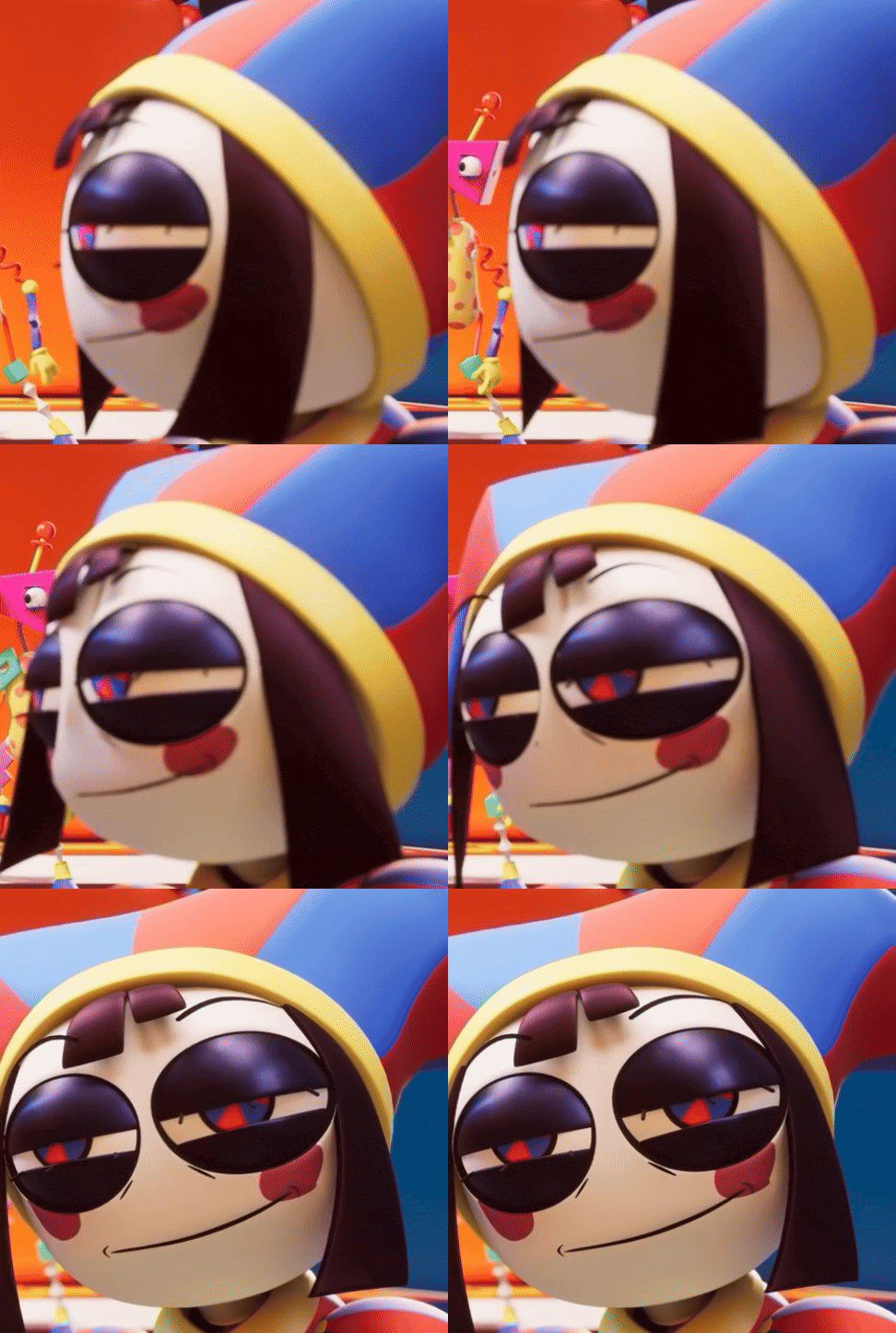
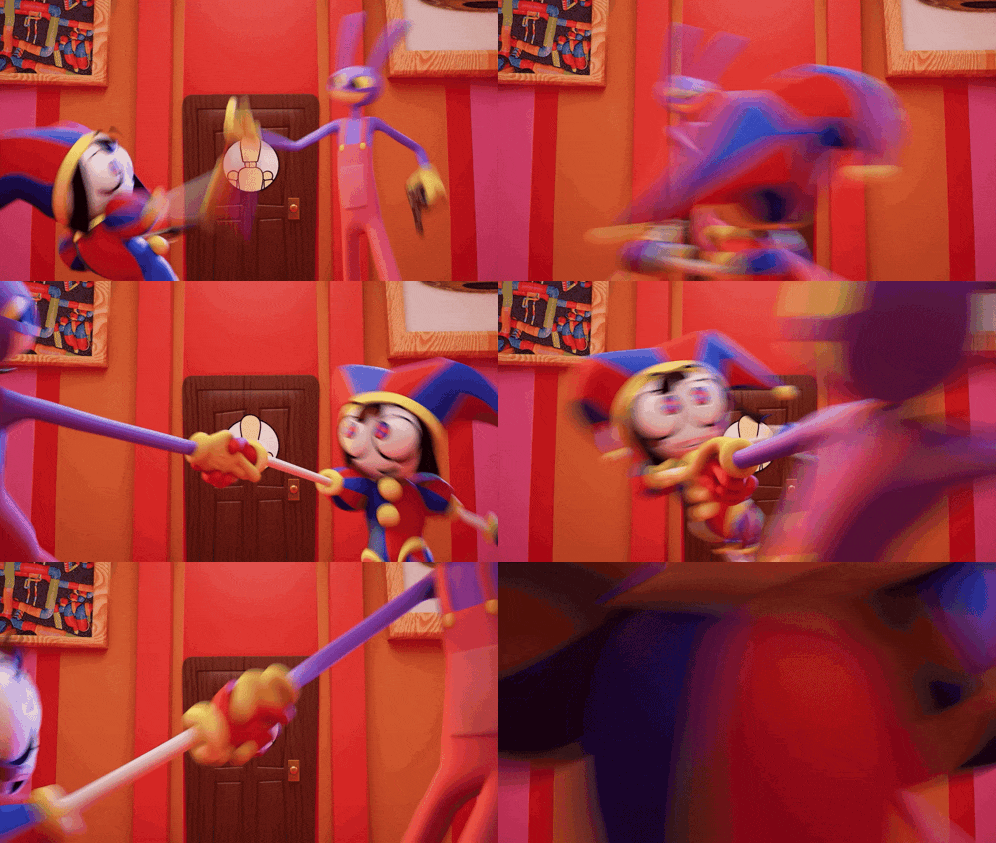
The final shot of Pomni’s cracked smile became a meme template within hours of the pilot dropping; not because a marketing team planned it, but because the image was genuinely haunting and the audience was already in the room.
When 61% of 14-to-24-year-olds say they watch indie animation as much as or more than major studio content, they are not describing a preference.
They are describing a generation that has voted on which contract they prefer. Two brothers in Sydney built the operating system for that contract. Most studios are still reading the marketing report.
Abbas Saleem Khan is a Principal Consultant at Llama & Griffin, advising game studios, streaming platforms, and investment funds across six continents. He writes The Pattern Recognition: gaming industry intelligence 12 to 24 months before it becomes consensus.