
Microsoft Just Reset Xbox: Thirty Years of Over-Hubification Made It Inevitable
Over-hubification, the living room, and why the hub has to be unbuilt before it can be rebuilt

TL;DR: On February 20th 2026, Microsoft announced a leadership reset at Xbox, replacing the outgoing team with Asha Sharma: head of CoreAI.
Her first commitment to Xbox fans was “the return of Xbox,” and her first promise to the team was direct: “we will not chase short-term efficiency or flood our ecosystem with soulless AI slop.”
The fact that those things need to be promised tells you everything about how Xbox got here.
This is not a leadership failure; it is the endpoint of a structural failure called over-hubification: the mistake of trying to become the center of people's lives before earning the right to be there.
You don’t get to be the hub, users make you the hub.
And Microsoft has been trying to skip that sequence in the living room for thirty years.
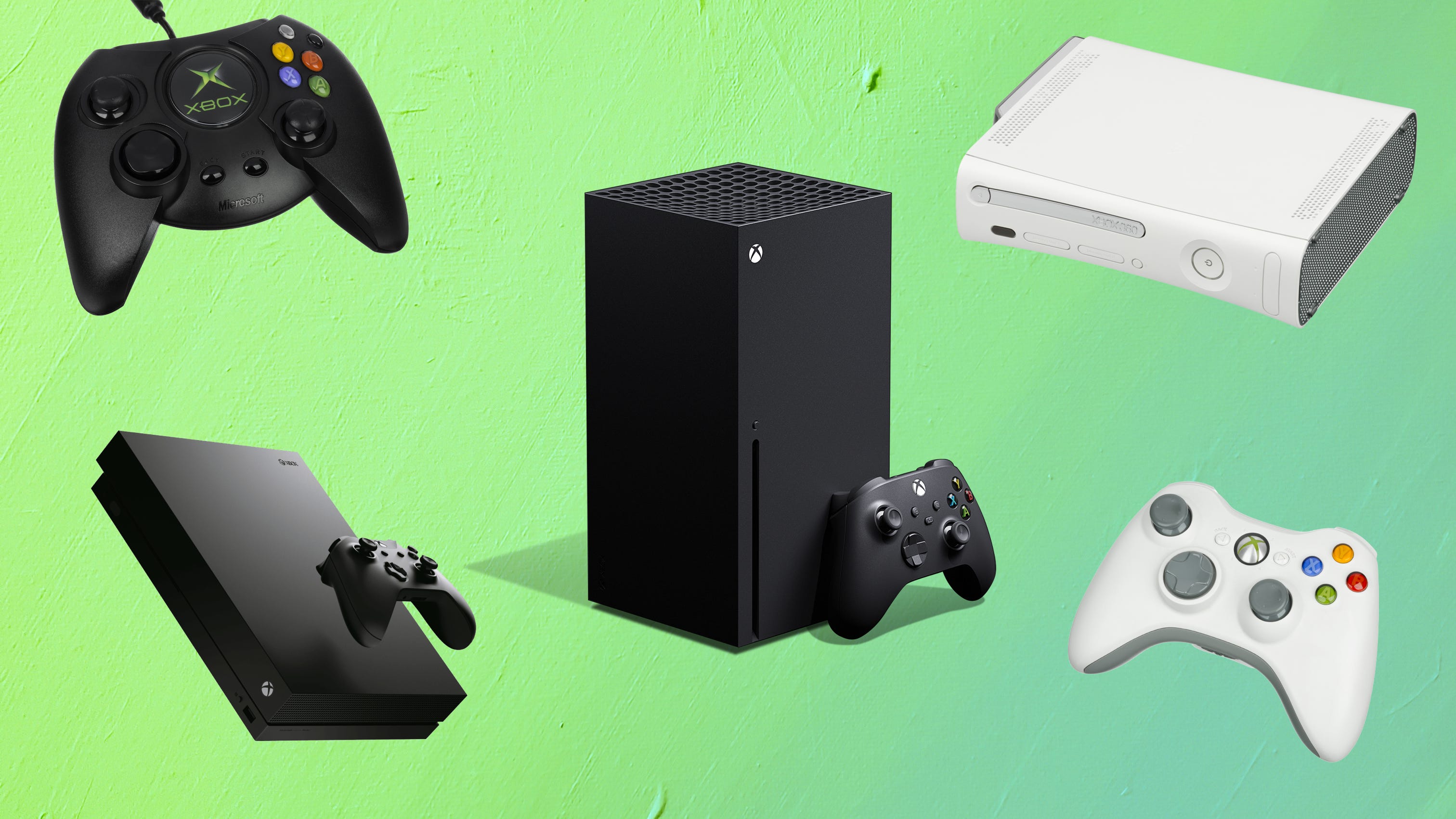
Microsoft’s Thirty-Year Living Room Problem
Microsoft understood early that the television was where attention lived. Not the PC, not the phone: the TV, the shared screen in the room where people actually relaxed.
WebTV was the first attempt, launched in 1996: plug a box into your television and put the internet on the big screen. Low adoption. The living room rejected it.
So they rebranded it as MSN TV; same technology, different name, same result.
Then came MS ITV: a .NET-based set-top box platform that would put Microsoft inside the cable signal path between you and your TV, sitting in the infrastructure layer inside cable operators’ own hardware.
I worked on that stack early in my career. Blech. Same wall.
The living room resisted every direct approach, and for years I could not fully articulate why. Different names, different pitches, the same wall every time. The only device that ever actually made it under the TV was the games console; not because Microsoft cracked some code for living room dominance, but because people were already plugging consoles in.
The HDMI slot (and AV cables) were spoken for. The shelf space was claimed. The relationship already existed. Xbox became the Trojan horse that WebTV and MSN TV never could be, and for a while, that was enough.
I did not understand the deeper pattern until I was sitting in a hotel room in 2013 watching the Xbox One reveal.
Forty-five minutes of NFL partnerships, TV integration, cable passthrough, fantasy sports overlays, and Kinect voice controls for switching channels; the word “games” was secondary to the word “entertainment” throughout.
I texted my colleague: “Who is this for?”
The reply came back: “I think it’s for the people who make the slides.”
That line has stayed with me for twelve years. The reveal was not bad in the way broken products are bad; it was bad in the way a perfectly executed pitch for something nobody asked for is bad.
The engineering was real, the partnerships were real, and the audience was not. It was like all those flyers and cross-promotions you received with your credit card bill.
Also Blech.
The Org Chart on Stage
There is a principle in software engineering called Conway’s Law, identified by Melvin Conway in his 1968 paper “How Do Committees Invent?”: the shape of a product tends to mirror the shape of the organization that built it.
A company with six divisions that all demand representation ships a product with six feature areas, whether users need all six or not.
The Xbox One reveal was Conway’s Law performed on a stage in front of the world: the gaming division, the entertainment division, the NFL partnership team, the Kinect team, the TV integration team, and the Skype team each received their moment, and not one user outside that building had asked for all those teams to have moments.
That is what over-hubification looks like at launch: a strategy deck performed as a product reveal, structured around the org chart rather than around what people actually came for.
Why the Living Room Always Rejects Enterprise Behavior
Over-hubification is, at its core, enterprise behavior: a checklist of integrations signed off by product managers, partnership decks approved by legal, and synergies blessed by a steering committee that has not turned on a console for pleasure in years.
The problem is that consumers do not live inside enterprise logic; they resist it instinctively, the way you resist a conversation that is technically polite but obviously transactional.
The living room is not a platform. It is an escape from the world where platforms compete for your attention, your wallet, and your data; and games occupy that space with particular intensity, as the two hours where the promotion-saturated world outside the screen simply does not exist.
When a console reveal spends forty-five minutes on NFL partnerships and cable integration, it is not speaking to a player; it is speaking to a boardroom, and the player on the couch recognises the difference immediately, even if they cannot name it.
There is already a relentless barrage of cross-promotions, bundles, upsells, and ecosystem lock-in strategies saturating every other surface of a consumer’s day: the phone, the browser, the streaming queue, the checkout page.
The living room is one of the last spaces people have genuinely defended against that barrage, and they defend it not through policy but through attention withdrawal; they simply check out, not with a press release or a public statement, but with the quiet finality of someone who picks up their phone during your pitch and never looks back up.
Microsoft’s mistake was not building features consumers did not need; plenty of products have recovered from that.
The deeper mistake was violating the implicit contract of the space they were operating in: treating the living room as an enterprise deployment opportunity rather than as a place people go specifically to stop being managed.
Once that contract breaks, trust does not erode gradually; it collapses, because the consumer’s resistance to enterprise behavior in their leisure space is not a preference, it is a boundary.
What a Natural Hub Actually Looks Like
Here is what makes the erosion so legible in retrospect: the Xbox 360 had already demonstrated the correct sequence.
The 360 earned its place under the TV by doing one thing exceptionally well: games.
Because people trusted it as the box they turned on every evening, layering media features on top made sense; renting films through the dashboard worked, buying TV episodes worked, and the integration was unobtrusive enough that nobody had to rethink their relationship with the device to use those other things.
Halo 3 is the clearest illustration of why. Jane McGonigal documented it as an “epic context”: a world compelling enough that players felt they belonged to something larger than a single match, accumulating 10 billion kills across roughly 15 million players.
Her critics were right that most of those kills came from individual matches rather than coordinated effort, but that criticism actually strengthens the point.
Even the loosely accumulated version, where 15 million people independently chose to show up because the game was worth it, is more powerful than any designed hub.
Nobody at Microsoft had to build an architecture around Halo 3; Halo 3 was the architecture, and players organised themselves around the content because the content earned it.
The 360 was not a hub. It was a thing people trusted, which made it act like one.
Then the Xbox One tried to skip that sequence entirely.
The Sequence Inverted
I have watched this play out in consulting constantly.
The instinct is always the same: a company earns trust doing one thing well, then someone in a strategy meeting draws a diagram with arrows pointing to a box in the center labeled “us,” and the question nobody asks is whether anyone outside that room asked to be managed from that box.
Fair: the Xbox One was technically impressive, and routing your cable signal through the console while overlaying Xbox features on live TV was genuinely interesting engineering (because I did it too).
The infrastructure was real and the vision was coherent on paper.
But shifting the narrative from “does one thing so well that you trust it with other things” to “does everything; restructure your living room around it” created a gap that quality alone cannot close.
Core gamers felt taken for granted because the thing they came for was buried under TV partnerships; non-gamers had no reason to choose Xbox as their living room hub when their smart TV already handled most of what was being pitched.
CNET called it “the dazzling, erratic everything box,” and “everything” was the insult, not the compliment. PS4 outsold Xbox One more than two to one: 117 million units to roughly 50 million, in a generation the previous cycle had ended roughly equal.
The Decade of Rebuild
What over-hubification actually costs is not the launch failure; it is the decade of rebuild that follows.
Because the underlying mistake is never corrected, every subsequent team inherits a product with the wrong foundation, and the response is always the same: redesign the dashboard, rename the strategy, reposition the brand.
The Xbox One dashboard was rebuilt so many times between 2013 and 2020 that it became an industry punchline; each redesign tried to make the everything box more usable without asking whether it should be an everything box at all, which made the UI work feel like endless drywall over a cracked foundation.
At the strategy level the loop was identical: “entertainment hub” became “games and entertainment platform,” which became “Xbox everywhere,” which became “software and services on every device.”
Each iteration was sincere, and none addressed the root cause, because the root cause requires a division to shrink before it grows, and no division in a public company volunteers for that.
The numbers at the end of it tell the story plainly: gaming revenue down 9% year-on-year, hardware revenue down 32%, console prices raised twice in a single year, three major games cancelled mid-development, and Call of Duty: Black Ops 7 debuting at number five rather than number one.
An undisclosed impairment charge in the quarterly filing was described by management as results “well below expectations.”
Those are not the numbers of a platform that found its footing; they are the numbers of a platform that kept re-architecting instead of compounding.
The Pattern at the Leadership Level
Asha Sharma’s appointment is not a correction to the pattern; it is the pattern expressing itself at the leadership level.
Her three commitments, great games, the return of Xbox, and the future of play, read like a direct acknowledgment of the sequence that was skipped: earn the core first, then expand.
The sequencing is correct. Whether an executive whose entire career has been in AI platforms and consumer infrastructure can resist the institutional pull to platform-ify everything is the open question, and it is a genuinely hard one.
Xbox has always been the place Microsoft sends the next technology wave it wants to dominate; AI is simply the current wave, and the temptation to make Xbox the enterprise delivery layer for Microsoft’s AI consumer ambitions will be significant.
Resetting the Everything Box Means Resetting the Content Too
The “no soulless AI slop” promise is more specific than it sounds. Microsoft is not just managing a PR optics problem; this is a structural acknowledgement about what games actually are and what AI models fundamentally cannot do with them.
AI models learn from data: text, images, patterns of human output that can be ingested, weighted, and reproduced. Games are not that.
A game is not a document to be processed; it is a system of decisions, consequences, and emotional states that only exist in the moment of play. The model can generate art assets and write dialogue and produce quest descriptions, but it cannot play the game, which means it cannot know whether any of those things actually feel right at the moment a player encounters them.
The trust between a player and a game is built through thousands of micro-moments of agency: the weight of a jump that lands correctly, the satisfaction of a mechanic that clicks, the frustration of a challenge that is hard in exactly the right way. Those are not things a model trained on data can calibrate, because the data does not contain the feeling.
Flooding the ecosystem with AI-generated content is over-hubification at the content level: building the architecture of a game without earning the player’s trust through the experience itself. It is enterprise behavior applied to the thing the living room was defending against enterprise behavior to reach.
The promise to resist it is not a creative values statement; it is a structural acknowledgment that the reset of the everything box has to include resetting the content philosophy that almost made the box irrelevant.
The promise will be tested quickly. Activision, now part of Microsoft’s portfolio, has already used generative AI to produce art assets inside Call of Duty.
The commitment is real; whether it survives contact with a $69 billion acquisition and its associated margin pressure is a different question.
The debatable take: if they succeed, it will not be because they resisted that temptation entirely; it will be because they managed the sequence correctly, building the games case first and letting the AI infrastructure follow rather than lead.
If it fails, it will be because the org chart problem is structural rather than personal, and no single appointment corrects Conway’s Law.
The brands that recover from over-hubification do not do it through better hubs; they do it by returning to the thing people actually trusted them for, making that thing excellent again, and earning the expansion one layer at a time.
The return of Xbox starts with returning to what Xbox actually was before someone drew the arrows.
A good hub is an outcome of trust; it was never a substitute for it.
Abbas Saleem is Principal Consultant at Llama & Griffin, working with game studios across six continents. He writes The Pattern Recognition, providing gaming industry intelligence 12-24 months before consensus.
LinkedIn | Schedule a call on Calendly
Some Notes:
This piece grew out of an exchange with Marion Ranchet at Streaming Made Easy. She asked about who owns the living room, and my answer kept expanding because the pattern underneath it is one. It was further modified with the change in XBox’s leadership later in the week.
The Activision/Call of Duty AI art assets claim is confirmed by PC Gamer: The AI assets were discovered by players in Call of Duty: Modern Warfare III promotional material in late 2023 ; before the Microsoft acquisition closed. The more recent cases involve AI-generated content in Warzone and Modern Warfare II / III post-acquisition.
Sources and References
Xbox leadership reset, February 2026
Phil Spencer retirement and Sarah Bond departure: The Verge, February 20, 2026; CNBC, February 20, 2026
Asha Sharma appointment and background
Business Insider, February 19, 2026; Variety, February 20, 2026
Sharma’s three commitments and first memo to the team
Microsoft Blog, February 20, 2026; Hindustan Times, February 20, 2026
Full “no soulless AI slop” quote, confirmed verbatim
Kotaku, February 20, 2026; PC Gamer, February 20, 2026; TechRadar, February 20, 2026
Activision use of generative AI in Call of Duty
PC Gamer, February 2026
Xbox financial results Q2 FY26: gaming revenue -9%, hardware -32%, impairment charges
GameSpot, January 28, 2026; Simulation Daily, January 27, 2026; XboxEra, January 27, 2026; Tech4Gamers, January 27, 2026
Xbox hardware revenue declining for two consecutive years
IGN, January 2026
Xbox price increase and hardware strategy shift
MSN / Windows Central, December 2025
Xbox strategy driven by fear of Sony owning the living room
Pure Xbox, November 2025
Xbox “everywhere” multiplatform strategy
TechBuzz, 2025
Xbox One vs PS4 lifetime sales (~50M vs 117M); prior generation roughly equal (~84M each)
Wikipedia: PlayStation 3; Wikipedia: Xbox One
Xbox One dashboard redesigns 2013–2020
Windows Central, August 2020
CNET on Xbox One: “dazzling, erratic everything box”
CNET, November 2013
Microsoft’s interactive TV history: WebTV, MSN TV, set-top box platforms
Last100: Microsoft on your telly, July 2007; Business Insider: History of ITV failures, November 2011; Microsoft Research: The Microsoft Interactive TV System
Conway’s Law
Melvin Conway, “How Do Committees Invent?” (1968). Wikipedia; Learning Loop
Hub emergence, preferential attachment, and hub aging in network science
Wikipedia: Hub (network science)
Hub economy and hub firms
“Managing Our Hub Economy,” Harvard Business Review. HBS Faculty Research
Jane McGonigal on Halo 3 and the “epic context”
Jane McGonigal, Reality Is Broken (2011), Chapter 6. Richmond University blog; Games Criticism review
Criticism of McGonigal’s Halo 3 argument
City State
The exchange that shaped the living room framing
Marion Ranchet, Streaming Made Easy
I've had this theory for quite a while that one of society's bigger problems is that corporations don't think past the next quarterly report. It's not enough to have a product that works well and that people like. Every 3 - 12 months it has to have more and new features. It doesn't have to be better, it just have to be different.
Great article! I like the aspect that the Xbox had to earn its place under the TV. In my opinion, Xbox forgot exactly that: that with the physical console, they had an artifact that fans identified with the brand. An artifact that was created and mystified by the narrative of the console war, which people chose out of conviction. When you suddenly only exist as a digital service, it is precisely this identity-forming element that is lost.