
The Engine Beneath the Magic Kingdom: Disney isn’t looking to buy Epic for Fortnite
It’s buying the operating system it’s already built on.

TL;DR
Everyone thinks this is about Fortnite, UEFN, and finally reaching young male audiences Disney has never been able to access. But, it’s only about 20% of the actual story.
The other 80% is infrastructure: Film sets, theme parks, ride operations, animatronics, character pipelines. A significant portion of Disney’s ecosystem is already built on Epic’s technology and toolchain.
StageCraft volumes film The Mandalorian on Unreal Engine; Imagineers design Villains Land in Unreal before breaking ground; digital twins run Rise of the Resistance on Unreal; animatronic patents cite Unreal Engine by name
Disney recently moved its entire Games division into Disney Entertainment alongside streaming, film, and TV. The Epic partnership is now structurally central, not peripheral.
The acquisition case is compelling. The ownership paradox is the actual problem: the thing that makes Epic’s tools worth owning is precisely their neutrality, which full ownership would destroy.y
I was in a meeting with a streaming platform client three months ago: They’re building toward interactive entertainment, which means eventually they need to figure out what technology stack to build on. Someone on the product side, new to the industry, asked the room what game engine they should use for their first project.
Three people answered simultaneously. “Unreal Engine.”
The product person paused. “Isn’t that Epic? The Fortnite people?”
The room went quiet in the way rooms go quiet when a question is technically correct but misses the point entirely.
“Yes,” someone said. “That’s them.”
Unreal Engine is Epic's real-time 3D software. It's what most of the world's premium games are built in. And, as it turns out, quite a bit more than that.
This is the moment I want to unpack. Everyone in that room knew the answer instinctively and nobody had explained why. It’s the same instinct Disney is acting on, with considerably more money on the line.
The Fortnite story is the wrong story
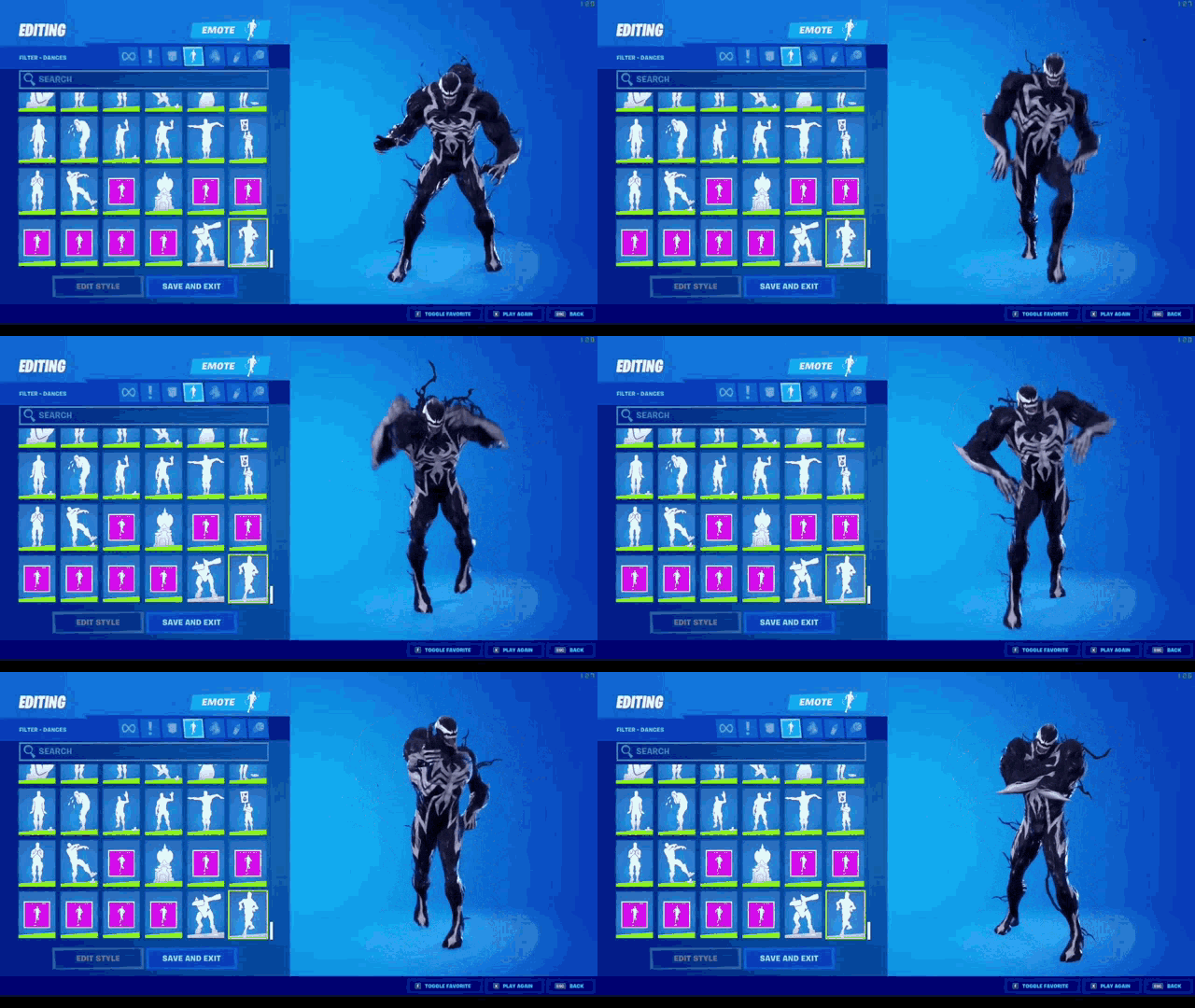
Every piece of mainstream coverage about Disney’s interest in Epic starts in the same place: Fortnite’s 650 million registered users, the young male demographic Disney struggles to reach, the metaverse opportunity.
The gaming revenue UEFN (Epic’s creator platform that lets anyone build games inside Fortnite) is quietly building toward. None of that is wrong. It’s just about 20% of the actual argument.
The other 80% is infrastructure. Disney isn’t considering Epic because it wants to be in games. Disney is considering Epic because Epic is already the invisible operating system for Disney’s most capital-intensive business operations.
Unreal Engine renders 3D environments in real time. It handles lighting, physics, character animation, world-building.
It started in games and spread everywhere: film sets, architectural previews, theme park rides, industrial simulations. Wherever someone needs a photorealistic digital environment that responds to what's happening around it, Unreal Engine is almost certainly underneath it.
I’ve written before about companies that declare hub status before the ecosystem has agreed to grant it.
This is the other version of that problem: A company that has quietly become dependent on infrastructure it doesn’t own, now deciding whether to buy the foundation or keep renting it.
The restructuring happening in real time
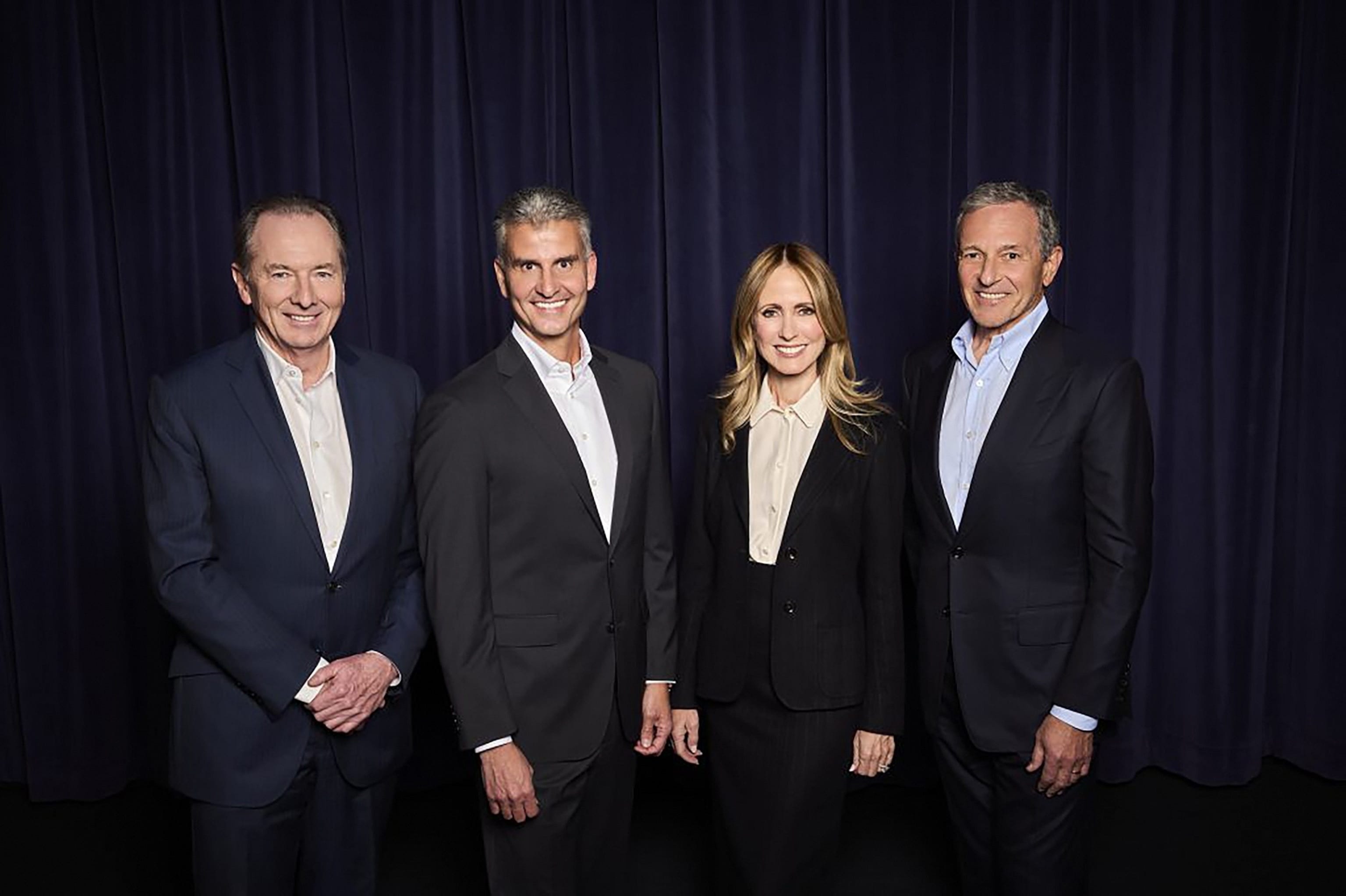
On April 8, 2026, the Wall Street Journal reported that Disney’s new CEO Josh D’Amaro is cutting approximately 1,000 jobs across marketing, studios, television, ESPN, and corporate functions. D’Amaro took over from Bob Iger on March 18.
This is not a standalone event.
It is the latest move in a deliberate multi-year compression: Chapek expanded aggressively, Iger returned in 2022 and cut 8,000 jobs chasing $7.5 billion in savings, D’Amaro has 1,000 more on the way.
Each round makes Disney leaner and more dependent on technology that does the work humans used to do separately for each channel.
The move almost nobody covered: two days before D’Amaro formally became CEO, Disney quietly restructured its entire Games and Digital Entertainment division out of Parks and Experiences and into Disney Entertainment, now under Dana Walden alongside streaming, film, and television.
Sean Shoptaw, the executive who directly manages the Epic Games partnership, now reports to Walden, in the same division as Disney+, Hulu, Marvel Studios, and Lucasfilm.
Games are no longer a side business managed inside theme parks: They are core to the same structure that runs everything else.
The surface reading of this week is bad. Epic laid off around 1,000 people in recent months. Fortnite engagement is declining. The Bloomberg report on the Disney extraction shooter came alongside coverage of missed internal targets.
In the same week, OpenAI shuttered Sora (its AI video generation platform) and killed a prospective $1 billion Disney AI deal, leaving D’Amaro’s technology strategy exposed on two fronts simultaneously. Most analysis has treated all of this as evidence that the Disney-Epic investment is under pressure.
The Fortnite numbers are the wrong numbers to look at. Epic’s layoffs were driven by Fortnite’s consumer revenue underperformance. Unreal Engine licensing, Megascans, MetaHuman, RealityCapture, and Twinmotion (Epic’s architectural visualisation tool used by Imagineering for resort and ride design) are B2B enterprise tools. Subscription and royalty models. Structurally independent of Fortnite’s engagement cycles.
The consumer gaming surface is under pressure. The infrastructure layer is not.
The Sora collapse makes the same point from a different angle: Disney has built itself into a position of external technology dependency across multiple fronts simultaneously. Epic is not the exception. It is the most important example of a pattern.
Start with The Mandalorian
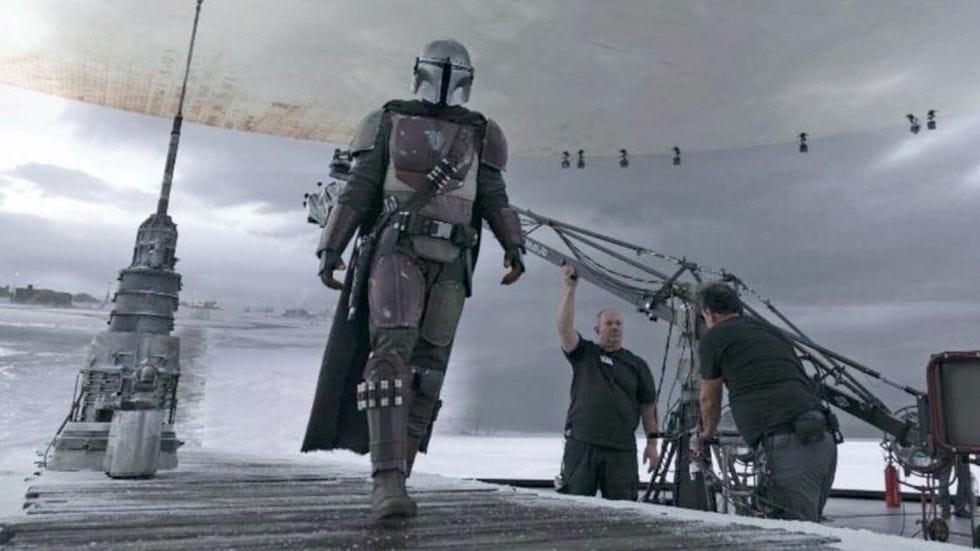
Industrial Light & Magic (ILM) built StageCraft: the LED volume technology that changed how The Mandalorian looks and how Disney shoots television. Those 1,326 LED panels. 21 feet tall, 75 feet in diameter, displaying photorealistic CGI environments that shift with the camera in real time. That whole system runs on Unreal Engine.
ILM then built “Helios” on top of it, a custom rendering system designed specifically for the StageCraft hardware. Helios is ILM’s own proprietary innovation, built on top of Unreal Engine. That is not a vendor relationship. That is a foundation. The volumes on Ahsoka, Thor: Love and Thunder, and Ant-Man and the Wasp: Quantumania all run the same way.
Disney is currently paying Epic $1,850 per seat per year for non-gaming uses of Unreal Engine. ILM has global studios in San Francisco, London, Sydney, Singapore, Vancouver, and Mumbai. Add Walt Disney Animation, Pixar, and Imagineering offices worldwide. The per-seat licensing costs are not trivial. More importantly: Disney has zero influence over Unreal Engine’s development roadmap under the current vendor relationship.
Then go to the parks
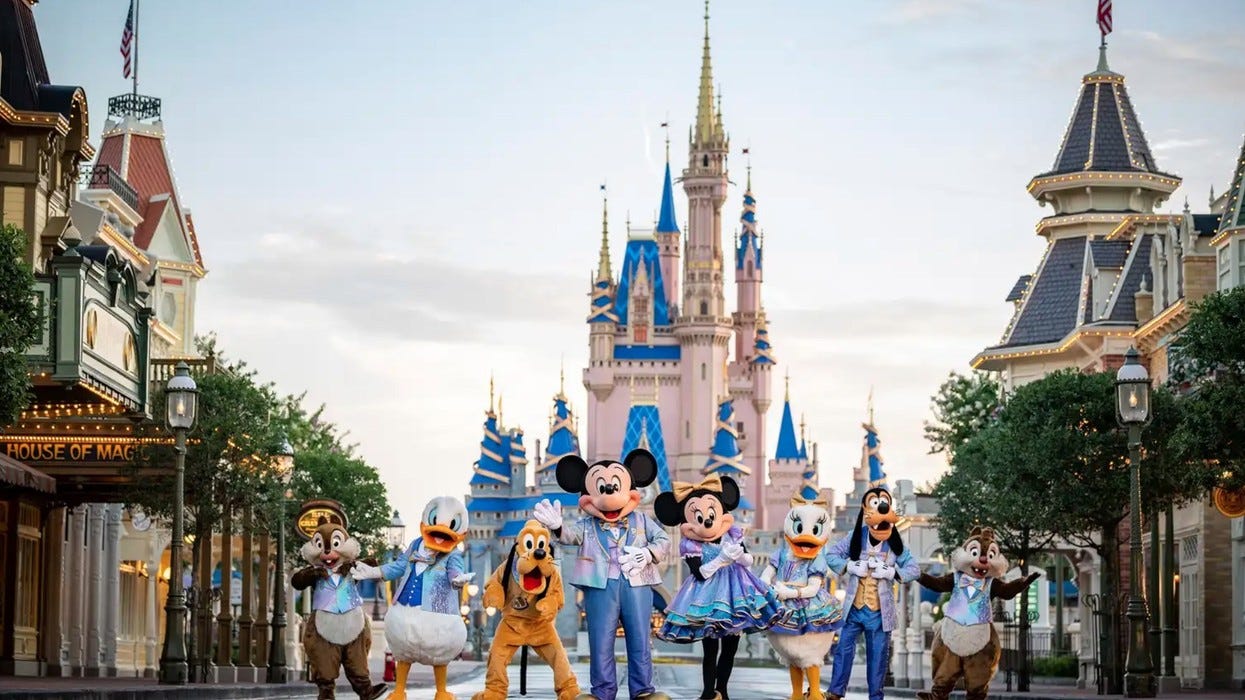
At Unreal Fest Orlando 2025, Disney Imagineering’s executive VP of Creative and Interactive Experiences confirmed publicly that “many rides at Disney are built in Unreal” and “the parks themselves are actually designed in an Unreal Engine simulation.”
Sit with that for a moment: Before a theme park land breaks ground, before a single physical element is built, Imagineers walk through it in a real-time 3D environment. They test sightlines from every queue position. They check whether a child in seat 6 can see the sign. They feed ride vehicle motion profiles into the engine and preview how scenes unfold at different speeds. This caught design issues on Mickey & Minnie’s Runaway Railway before installation.
The Millennium Falcon: Smugglers Run mission update launching May 22, 2026 is explicitly powered by Unreal Engine 5. Disney’s own communications state the enhanced storytelling is “only made possible with Epic’s Unreal Engine 5.” That is a theme park ride announcement crediting the game engine.
Rise of the Resistance runs a digital twin (a real-time virtual replica of the physical ride, fed by live sensor data) capturing 30,000 to 40,000 data points simultaneously. Millions of sensor readings per hour.
When an animatronic goes out of spec, the digital twin triggers what Disney calls the “B-Plot”: a pre-prepared alternate show sequence that replaces the failing element in real time. Most guests never notice. The ride tells a different story while maintenance teams repair the figure offline.
This is Unreal Engine fused with IoT at industrial scale:" Disney is already doing it. It just doesn’t own the underlying engine.
The MetaHuman signal most people missed
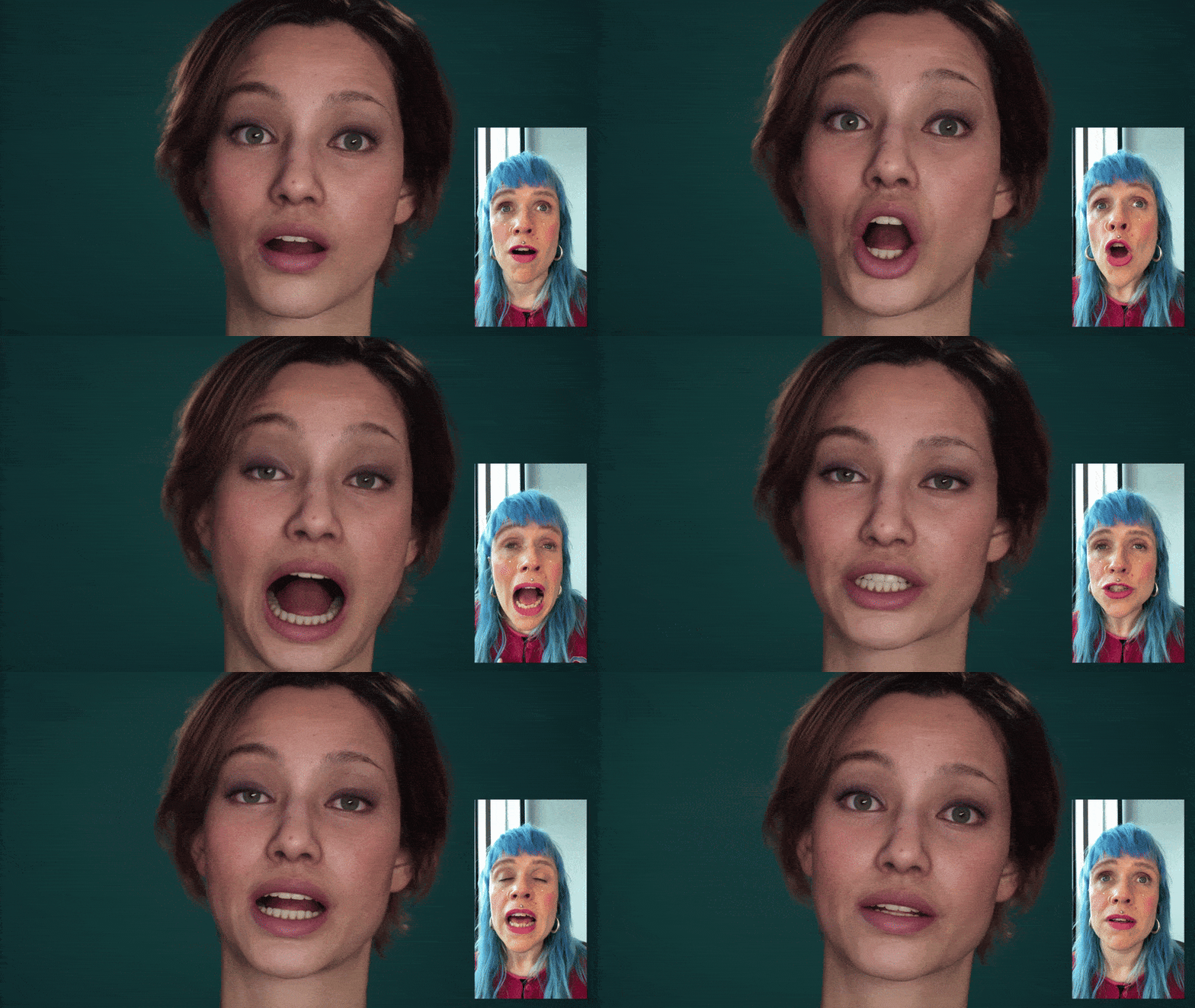
In November 2025, Walt Disney Imagineering unveiled next-generation Audio-Animatronics. The system uses real-time front projection onto a static mechanical shell to render emotional expressions previously impossible in physical animatronics: crying, blushing, morphing, reacting to guests in real time.
Disney has filed a patent describing this system. It cites Unreal Engine as the candidate renderer, combined with AI and large language models for live character interactions.
The characters identified as ideal candidates: Mike Wazowski, Lightning McQueen, and Hades. All three have confirmed new theme park lands in development. Monstropolis, Piston Peak, and Villains Land. If those attractions open with Unreal-rendered faces responding to guests through AI, that is Epic’s technology in a Disney guest’s face. Literally.
MetaHuman Creator reduces the creation of a production-ready, fully rigged digital human from weeks to under an hour. Animated from iPhone footage via a 4D facial solver (software that combines video and depth data to map real performance onto a digital face).
In Disney’s hands, this becomes a permanent canonical digital twin of every character in its IP library.
The implications cascade: synthetic stunt doubles, de-ageing pipelines, canonical versions of Mickey and Elsa and Tony Stark in the engine at publication-ready fidelity. Every future production. Every platform.
As of Unreal Engine 5.6, Epic has opened MetaHuman licensing to Unity and Maya. Disney owning that standard means owning the dominant format for digital human creation across the entertainment industry. Not Disney’s format. The industry’s format. Owned by Disney.
I’ve watched infrastructure dependencies like this play out across consulting engagements on several continents.
The moment a company realises its most critical pipeline runs on someone else’s engine is rarely comfortable. It usually arrives right when something needs to change and they discover they can’t direct it.
The Fab flywheel and the financial argument
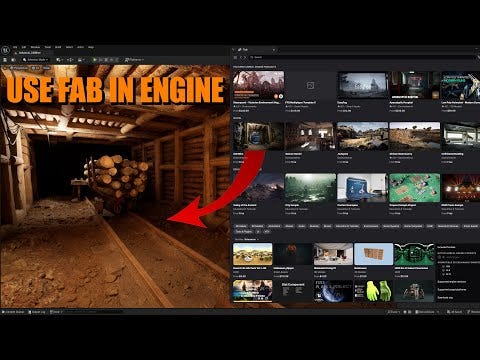
Fab is Epic’s unified asset marketplace, launched October 2024. It consolidates the Unreal Marketplace, Sketchfab, ArtStation, and Quixel into a single platform. Roughly 50% of active Unreal projects use marketplace assets. Sellers earn an 88% revenue share.
If Disney owned Epic, it could seed Fab with canonical IP assets: official Star Wars environments, Marvel character kits, Pixar vegetation packs. Every external studio building a Star Wars game or a Marvel VR experience would purchase from a Disney-owned, Disney-curated raw material library. Recurring revenue. And Disney’s aesthetic standards as industry defaults.
For context on valuation: Disney bought Lucasfilm for $4 billion in 2012. A full Epic acquisition at the current $22.5 billion valuation is 5.6x that price. But Lucasfilm delivered Star Wars, ILM, and Skywalker Sound. Epic delivers the underlying technology Disney’s own ILM already runs on. Plus a live-services gaming platform. Plus a creator economy.
Plus the Unreal Engine ecosystem serving the entire entertainment industry.
The licensing economics invert completely under ownership. Disney currently pays Epic a 3.5% royalty on game revenue above $1 million lifetime gross. As owner, Disney receives that royalty from every third-party studio shipping Unreal Engine games.
The Megascans angle is the quietest piece of this: Quixel’s photogrammetry library turns real-world objects and environments into production-ready 3D assets. Epic acquired it in 2019. It was the foundational asset resource for The Lion King’s photorealistic environments.
Disney could commission bespoke scanning programmes for its own IP: every Star Wars prop, every Marvel costume, every Pixar environment scanned to canonical accuracy.
Available across every Disney division. Every future production. In perpetuity. RealityCapture, Epic’s photogrammetry software acquired in 2021, means location scouts could simultaneously function as asset acquisition missions: scan the real environment on the way out, drop it into the pipeline on the way back.
The Ownership Paradox
Here is the debatable part, and I want to be direct about it: the toolchain argument actually cuts against full acquisition.
Unreal Engine’s dominance is self-reinforcing because it’s neutral.
Marvel’s competitors, Star Wars’ rivals, Netflix, Sony, Warner Bros.: all of them use it precisely because Epic is not a direct competitor in their content business.
The moment Disney owns Epic outright, a meaningful portion of that customer base has a rational reason to migrate. Unity. In-house engines. Emerging challengers. The network effects Disney would be paying for could deteriorate under the very ownership structure designed to capture them.
This is the same dynamic I’ve written about as over-hubification: declaring yourself the centre of an ecosystem before the ecosystem has agreed to grant it. Disney announcing control of the engine the entire entertainment industry depends on is a hub declaration. Whether the ecosystem accepts that hub or routes around it is the actual question.
The reported internal discussions as of March 2026 lean toward a deeper partnership or larger equity stake rather than a full buyout. That’s the right instinct.
A Bloomberg report from April 2026 revealed a Disney extraction shooter in development at Epic targeting November 2026. That tells you exactly how much pressure both sides are under to show results from the $1.5 billion partnership.
The four structures getting serious consideration:
Minority stake expansion from the current 6.6% to the 15-25% range without board control, preserving Epic’s independence while deepening financial alignment
Strategic partnership with veto rights on technology decisions affecting Disney’s operational dependencies
Full acquisition with Sweeney retained as CEO under protected independence, analogous to how Pixar was structured post-acquisition with Catmull and Lasseter
Partial carve-out: Disney acquires the non-gaming divisions (Unreal Engine, Megascans, RealityCapture, Twinmotion, MetaHuman) and leaves Fortnite and the Epic Games Store under Sweeney’s continued leadership
Jo Redfern framed the underlying choice cleanly. Fox sold its studio to Disney and rebuilt around creators and platform-native distribution. Paramount doubled down on legacy infrastructure and took on massive debt.
“One is buying deeper into the old model. The other is building relationships.”
Disney, right now, is trying to do both. It is cutting legacy headcount while building its technology strategy on a foundation it doesn’t control. The Epic decision is where those two impulses collide.
You can’t build the relationship economy Redfern describes while renting the engine it runs on from someone who might decide the roadmap goes somewhere else.
Each structure carries different risk profiles, and the right answer is probably emergent rather than designed. Sweeney’s vision for Epic is an open, neutral, interoperable metaverse platform. Disney’s historical approach to IP is arguably the most controlled, most litigated portfolio in entertainment history.
That is not a financial problem: It is a governance design problem. And governance design problems rarely resolve cleanly in a single transaction.
The Reframe
Disney has been building its future on Epic’s infrastructure for years and does not own the foundation.
The LED volumes on The Mandalorian: The Imagineering simulations designing Villains Land. The digital twins keeping Rise of the Resistance operational.
The animatronic patents citing Unreal Engine by name. The Megascans library that built The Lion King’s world. All of it runs on Epic.
The deed transfers cleanly. The ecosystem trust doesn’t. That’s the problem no transaction structure fully solves: you can’t buy your way to neutrality. And neutrality is exactly what makes the asset worth buying.
This one will play out over the next 18 to 24 months. I’ll be watching.
Abbas Saleem Khan is a Principal Consultant at Llama & Griffin, advising game studios, streaming platforms, and investment funds across six continents. He writes The Pattern Recognition: gaming industry intelligence 12 to 24 months before it becomes consensus.