
The Month That Does Not Move
Ramadan, gaming, and why the industry is slowly catching up to the biggest synchronized audience on earth

TLDR
Ramadan is the largest synchronised gaming window on earth. Most Western studios have never put it on a content calendar.
The studios that figured it out, Garena and Riot, built structural advantages that compound every year. The ones that did not are losing ground they do not know they are losing.
This post explains what Ramadan actually is, who is winning it, and what it costs to keep missing it.
Every year your studio plans around Christmas, Summer, and maybe back-to-school. Every year you miss a window that is bigger than all three combined in one of the fastest-growing games markets on earth. The studios that figured it out are not going to tell you about it.
That window is Ramadan. Thirty nights. A billion people on the same schedule. [Niko Partners] During it, mobile apps across the Middle East generate $1.7 billion in thirty days. [AppsFlyer] Strauss Zelnick, CEO of Take-Two Interactive, said it out loud in March 2025: “We still skew toward the US and Western Europe.” That skew has a measurable cost. It compounds every year.
The month Azooma: Escape found its audience
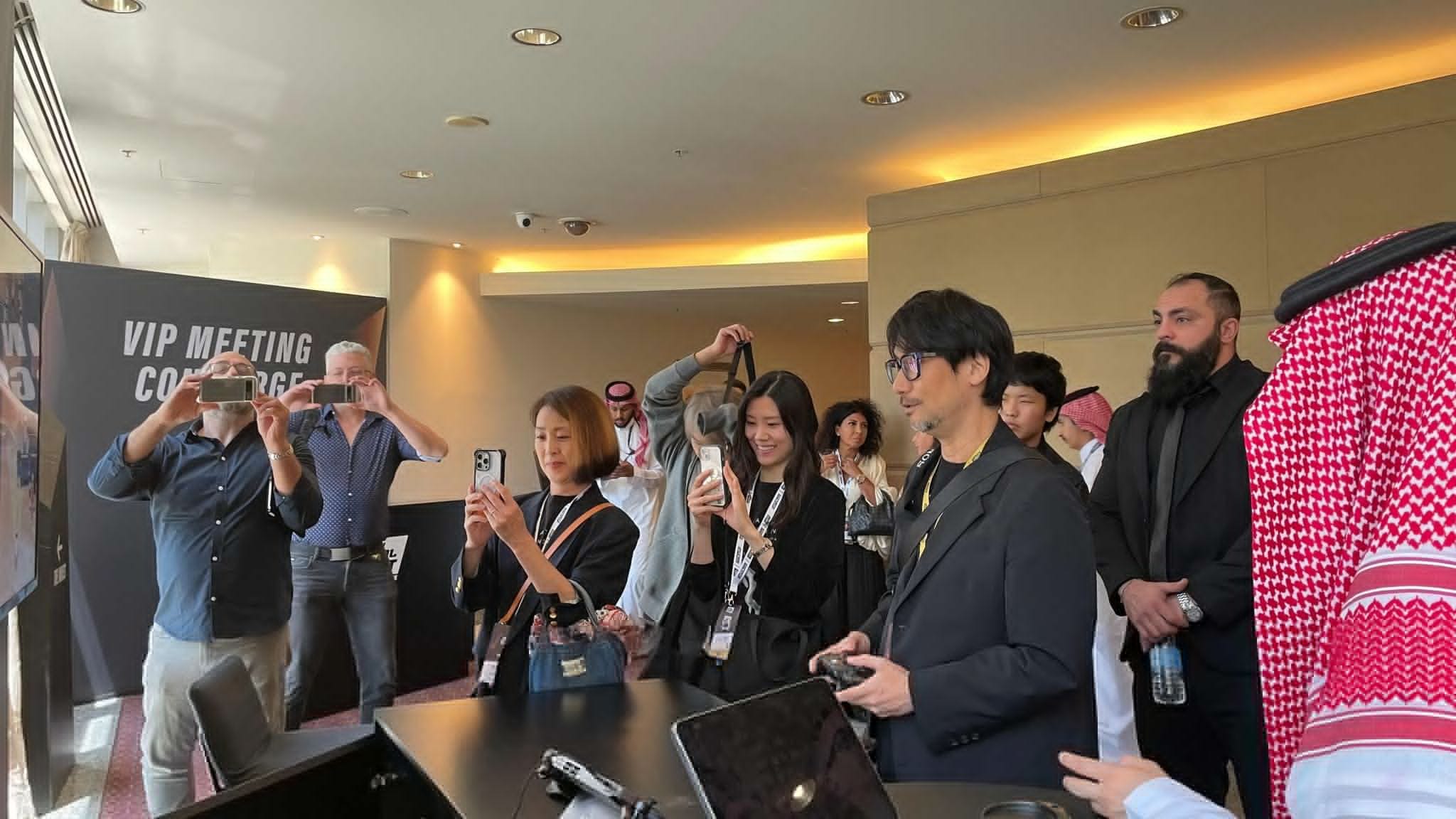
The game was Azooma: Escape. A Saudi-made comedy game about sneaking out of an Arab family gathering. We brought a demo to the Days of Ramadan Festival on Steam: the first Ramadan event in the platform’s history, organised by SEAGamethetic because nobody else would do it. [SEAGamethetic]
3.8 million unique viewers. 75,792 hours watched.
The full game launched in August. First Arab-made game to hit Steam’s front page on launch day. Hideo Kojima played it at NGSC two days later. TMFaisal: 5.4 million subscribers: made a 13-minute video that generated 458,000 views. He was not paid. He just played it.
And through all of it, Valve still had no Ramadan section. Apple and Google still had no Ramadan editorial. Twitch still had no Ramadan category. [PocketGamer.biz] The audience was just there.
That gap is what this post is about.
What Ramadan actually is, and why your content calendar does not apply
Start with the behaviour, not the religion.
Every day, two billion people follow the same rhythm:
No food or water from sunrise to sunset
Iftar at sunset: a communal meal with family and friends
Isha prayer, then Taraweeh: extended prayers wrapping up around 10 PM
The night opens up: fed, free, nowhere to be
Suhoor at 3 AM: a pre-dawn meal before the fast restarts
Sleep. Repeat.
For thirty nights in a row.
Now read that from a gaming perspective. Two billion people, wide awake and socially free between 10 PM and 3 AM, every night for a month, on the same schedule across dozens of countries simultaneously. This is not a cultural moment. It is a behavioural event with a predictable clock.
The reason Western studios keep missing it is not ignorance of Islam. It is a calendar problem.
The Islamic calendar is strictly lunar. It never corrects. Ramadan marches eleven days earlier every Gregorian year. The industry’s production machinery is built around dates that never move. Ramadan was never on that calendar.
The gaming industry already knows how to read a lunar calendar. Chinese New Year moves every year. Valve runs a sale. Every major studio has skins ready. Nobody calls it too complicated to plan around. The industry learned to read China’s lunar calendar because China was too big to ignore. The Islamic world is now too big to ignore too. It just has not admitted it yet.
Not all of Ramadan is the same session. Treating it as one is how you end up with EA’s one-star review.
Sunset to 10 PM: Iftar & Taraweeh: Social but structured. Not the primary gaming window.
10 PM to 2 AM: Peak gaming: Prayers done. Fed. Awake. Free. Where Azooma found its viewers.
3 AM to 5 AM: Suhoor: The most underexplored window in gaming. Garena has been owning it quietly for years.
These times shift by region. Iftar in Riyadh falls at 5:30 PM. In London during a summer Ramadan, sunset can be 9 PM. A mechanic designed around 10 PM in Saudi Arabia fires at a completely different hour in Kuala Lumpur. The studios that run Ramadan globally have built infrastructure to calibrate by timezone and latitude. That is a moat. Most studios do not have it.
The scale you are probably not running in your models
The global Muslim population is 2 billion today, reaching 2.8 billion by 2050. [Pew Research Center] Every year a studio ignores Ramadan, the audience it is ignoring gets larger. This is not a niche. It is a civilisational trend.
Saudi Arabia alone is a $1 billion games market. Transaction volumes spike 35–40% during Ramadan. [Think with Google] Indonesia has 240 million Muslims. Add Pakistan at 220 million and Bangladesh at 155 million and you have a South and Southeast Asian Muslim gaming market that dwarfs MENA in raw numbers and is growing faster. Total conversions across SEA and Pakistan during Ramadan were up 46%. [AppsFlyer]
The synchronisation is what makes this different from every other seasonal event. Christmas is fragmented. Diwali is regional. The Super Bowl is American. Ramadan reorganises a billion lives around the same daily clock simultaneously. Thirty nights. Every year. Without exception.
This is not a niche market with seasonal upside. This is a season.
Garena did not stumble into this
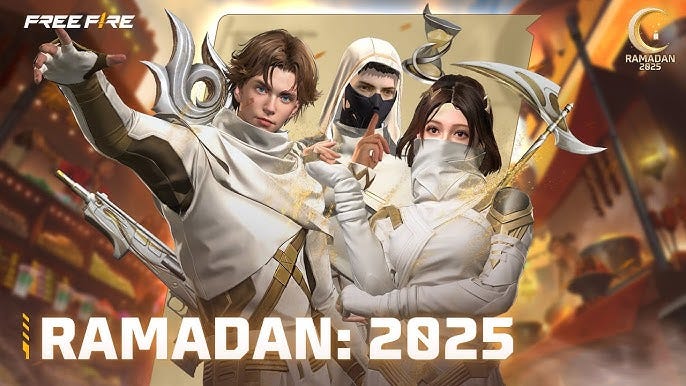
Free Fire launched in 2017 on one insight: two billion people owned smartphones under $200 and nobody was building for them. [Wikipedia] Approaching two billion lifetime downloads. Over 100 million active users, eight years later.
The downloads are not the interesting part.
Most Western companies see Southeast Asia, South Asia, and MENA as distribution markets. Garena saw them as communities to govern. That distinction explains everything.
Garena turned the 3 AM Suhoor window into a gaming session. Rewards that activated at 3 AM. Local teams who understood Suhoor as a gaming window and built mechanics around it. In Indonesia they offered Umrah trip prizes: the pilgrimage to Mecca: because they understood what that journey means to the players they were serving. [Think with Google]
In April 2021, Mohamed Ramadan: one of the most followed entertainers in the Arab world: became the first Arab celebrity to be a playable in-game character. Announced via projection on the Burj Khalifa. Given to players as a free Eid gift. [ITP Live]
Nobody who saw that understood it as a marketing campaign. They understood it as a statement.
You cannot license your way to that position.
Who is getting it right, and the example that should embarrass everyone
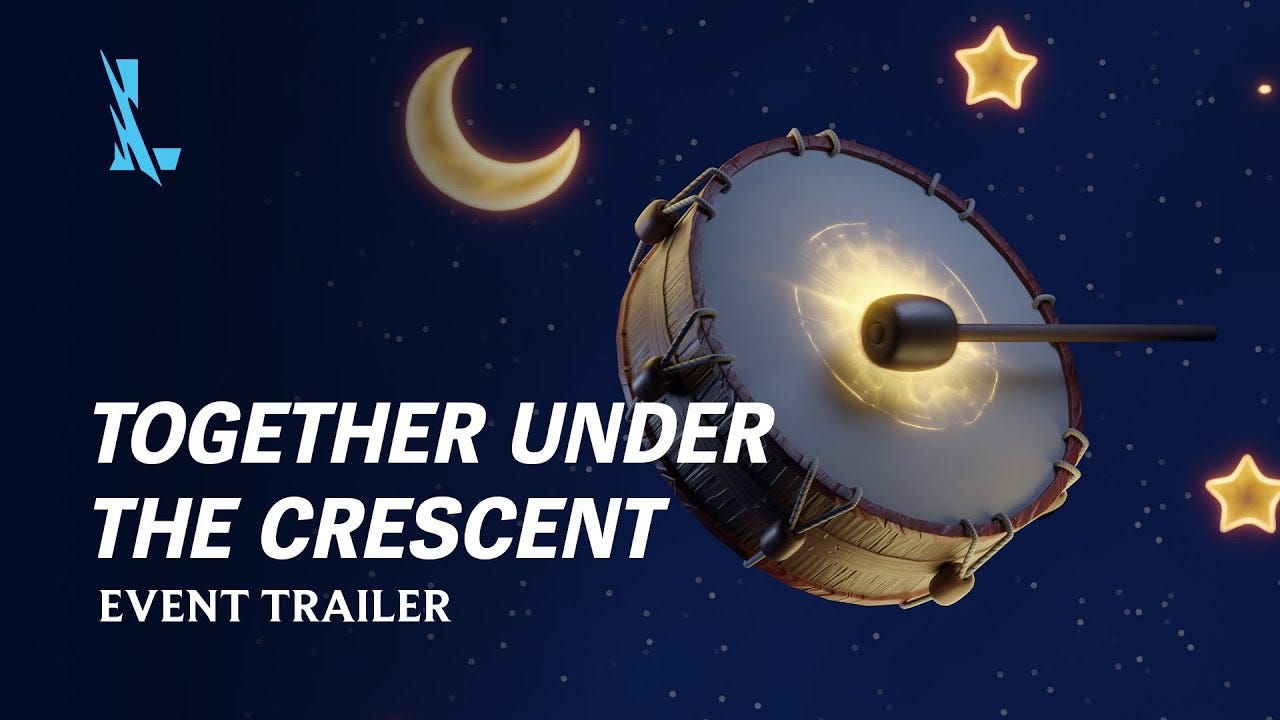
Riot built “Together Under the Crescent” from a strike team of Muslim employees across Dubai, Istanbul, and Singapore. [Riot Games] It did not start from a marketing brief. It started from Muslim employees advocating for it internally. The products that resonate with this audience are built by people who live the calendar they are designing for.
EA Sports FC Mobile ran a Ramadan event in 2024. The r/FUTMobile subreddit gave it one star. Three packs, no mechanics, recycled assets. [r/FUTMobile] The gap between Riot and EA is not a design gap. It is a proximity gap.
Arab creators invented Ramadan Craft inside Minecraft without any studio support. Two creators cooked their Iftar meal live in 2020 and drew two million viewers. [Think with Google] On Roblox, players built Iftar food systems and prayer mechanics years before the platform added Arabic language support. [Sinar Daily] The community built the product the platform never made.
The audience is not waiting for the industry to show up. It is running the R&D the industry has not commissioned.
The brands outside gaming already know
Matt Pickering, CEO of Power League Gaming, said in 2022:
“For brands across industries, Ramadan is one of the most important periods of the year to reach consumers, and gaming is now the tool they are turning to. That was four years ago. Four years of compounding growth later, it is more true, not less.”
In 2022, a beauty brand ran an all-female Fortnite tournament with a $12,000 prize pool during Ramadan.
A beauty brand.
Not a game publisher.
Telecom companies across the GCC now run Ramadan gaming tournaments as standard activations. Finance apps drove $650 million in in-app revenue during Ramadan 2025. [Arabian Business]
When the beauty industry and the finance industry and the telecom industry are using your platform to reach an audience during a specific cultural moment, and you are not, that is not a missed marketing opportunity.
That is a strategic failure.
The structural read
The question is not whether the audience is there. It has been there for forty years. The question is whether you are building structural advantage or scheduling a one-time event.
Garena’s position is structural. Local teams, payment infrastructure, years of Ramadan-specific community data built market by market. That is a moat.
Riot’s position is directional. Muslim employees in the rooms where decisions are made. That is how you get there.
EA’s position is extractive. Three packs, take the money, leave. The audience noticed.
The platform gap is still the largest open opportunity. The 2025 Steam festival was organised by SEAGamethetic because no one else would do it. Every studio building for this audience is operating without the tailwind Christmas gets as a matter of course. [SEAGamethetic]
The game industry tracks the calendars of the markets it has decided to prioritise. Ramadan runs alongside all of it on a separate track. Thirty nights. The same clock. A billion people on a schedule unchanged for 1,400 years.
Garena built structural advantages inside that schedule years before any anime deal existed. Riot is building the proximity. EA is learning the cost of building neither. Microsoft is following the community in.
This is also bigger than any single studio’s content calendar. Azooma was backed by a sovereign fund as part of Vision 2030: Saudi Arabia’s national programme to build and export culture, not just consume it. Eastern cultures have done this before.
K-pop and Korean drama did not happen by accident: South Korea made a deliberate decision to build cultural export infrastructure and created global demand that did not previously exist. Japan did it with anime. India did it with Bollywood.
Muslim countries are making the same bet on games, and it is backed at the level of national policy. The studios paying attention to Ramadan now are not just finding an audience. They are getting in early on a cultural export machine that is only getting started.
The audience was never waiting to be discovered. The industry is just slowly catching up to where it already was.
Note: I was the executive producer of Azooma Escape, the first Arab-made game to hit Steam’s front page on launch day. The Azooma data in this post comes directly from the Days of Ramadan Festival campaign. The rest of the analysis draws on client work, platform data, and the Arab gaming creator ecosystem I have been watching closely for several years.
Abbas Saleem is Principal Consultant at Llama & Griffin, working with game studios across six continents. He writes The Pattern Recognition, providing gaming industry intelligence 12-24 months before consensus.
LinkedIn | Schedule a call on Calendly