
Tomb Raider, a 7.6 Earthquake, a Herniated Disc, While Living Out of a Minivan
Why I work in emerging markets, and why I’m never going to stop

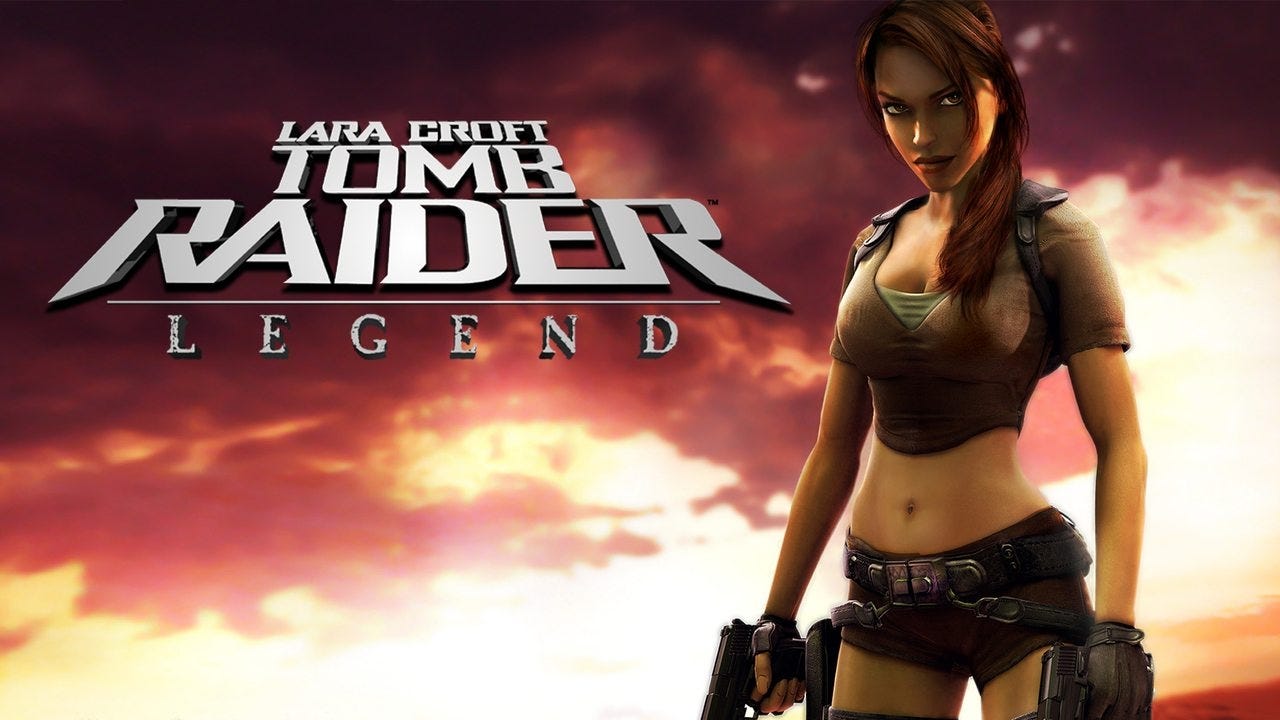
TL;DR: In 2005, a 7.6 earthquake temporarily condemned my apartment and I ended up living out of my minivan while our team worked on Tomb Raider: Legend through the aftershocks. Our names never made the credits.
That was twenty years ago. Since then, that career has spanned 500M+ global sales, a Peabody and Nelson Mandela Award, facilitating $10M+ in studio investments and work with the World Bank, UNDP, JICA, Coca-Cola, and Nike across six continents.
All of it traces back to a team that refused to waste its one shot.
“You’re a producer now.”
I was 27 with multiple herniated discs: I couldn’t sit at a workstation for more than twenty minutes without my back seizing up. A 7.6 magnitude earthquake had just collapsed the building across from mine and my apartment was temporarily condemned with it.
I loaded what mattered into my minivan. TV, consoles, a rolling mattress, some clothes. That was my life for a while. Relatives for a week, a friend’s floor for a few days, some nights the minivan itself. You learn to sleep sitting up when lying down hurts worse.
And somewhere in the middle of all that, I was supposed to be learning how to produce assets for Tomb Raider: Legend.
My parents who had moved to Athens a year prior begged me to come back.
No thank you. I think i’ll work on video games instead. And not just a video game but Tomb Raider! This is a career defining, once in a life time opportunity. I’m not going to mope around at my parents place healing from (a very avoidable, self-aggravated) back injury. I sure as hell wasn’t going to go back to being an accountant or a web designer.
Very wizard-of-you-Harry-Potter energy, except instead of a wand I got a minivan full of everything I owned, multiple herniated discs, and a production pipeline I barely understood.
I’m the art director for a PC indie studio. Consoles are the big leagues.
We were very much rookie ball in Latin America being asked to suit up and play for the Dodgers. Like that film where a pre-teen suddenly learns how to throw a 100mph fastball and is pitching for the Cubs.
Of course we would do it!
Because here’s the thing nobody tells you about that kind of opportunity:
We had no idea what we were doing.
Crystal Dynamics had a production pipeline and we had never seen it. Our US-based outsourcing partner would go get the details, bring them back, and we'd figure it out on the fly. We were a PC team who overnight needed to learn sixth and seventh generation console development. PS2, PSP, the brand new Xbox 360. Three hardware architectures, none of which we'd ever touched
But we were tenacious. There's something about working in adversity, being told you aren't smart or good enough with 6.5 aftershocks thrown on top for a month. You dig in, grit your teeth, and kick ass.
Nothing about it was glamorous. You learn toolchains that feel alien but familiar. Game development really has one language. Your US mentors show you how to do it right. Once you learn, you build on it. Get better. Git gud.
You show up from wherever you slept the night before and try to level up fast enough to justify being in the room.
The aftershocks would happen and you'd freeze for a second. But here is the thing about momentum: even if the world around you shakes, you still move forward. Everything around you disappears. It doesn't matter.
We knew what this was. A once in a lifetime opportunity. This wasn’t coming around twice for a team in Islamabad working through earthquake aftershocks, and either we shipped or we proved every skeptic right about why you don’t outsource to developing countries.
Our names would never be in the credits. We knew that on day one. That's outsourcing for you. Millions of people would play what we helped build and never know we existed.
The acknowledgment would come years later, in other forms, on other projects. But that wasn't the point. The point was doing. Getting your hands on a real production, proving you could ship. Everything else comes after.
You weren’t going to be the engine that failed. Not the studio that failed. We were the ones who did it.
That was twenty years ago, and I didn’t know it then, but that minivan was the start of everything. The career that would take me all over the world. GCC studios building from sovereign wealth and raw ambition. Government ecosystems standing up creative industries from nothing. Storytelling talent in Lagos and Jakarta that stops you cold when you hear it for the first time.
Nigerian writers who understand narrative structure at a level most Western studios would kill for. Brazilian creators building worlds that feel lived-in because they are.
And everywhere I go, I find us. The 2005 version of us. People who aspired to be the best versions of themselves.
A kid in São Paulo crafting a game between power outages. A filmmaker in Casablanca editing on a laptop that crashes every forty minutes. An animator in Bangkok learning on watermarked software because the license costs more than rent.
They’re not waiting for permission. They’re shipping.
Here’s what’s different now: they grew up inside the same stories as everyone else.
Ten years ago, a cultural event in one market took years to reach another. Bootleg DVDs and delayed broadcasts meant you discovered things late and you knew you were late. Now One Piece fandubs exist in Swahili, serving kids on phones in the remotest parts of the world. Not five years behind Tokyo. Same episode, same week.
In 2019, the entire planet came together to hate the Game of Thrones finale. Every timezone, every language, unified in disappointment. I watched Avengers: Endgame in three different countries with three different audiences speaking three different languages, and every single one erupted when Cap picked up Mjolnir.
Same cheer. São Paulo. Dubai. Riyadh. Cape Town. Islamabad.
This is what media parity actually looks like. Not access to tools, but access to the same imagination at the same time, everywhere. When you grow up on the same stories simultaneously, you dream the same dreams. And when you dream the same dreams, you want to build.
That’s the generation coming up now. Not creators who discovered global storytelling late and are trying to catch up, but creators who were inside it from the start. Who watched the same things, felt the same things, and are now asking: why can’t the next one come from here?
That’s why I work in emerging markets. Not because the talent is “emerging.” The dreams arrived a long time ago and the talent followed. I’m just lucky that a herniated disc and a minivan packed with everything I owned pointed me in the right direction to see it.
Abbas Saleem is Principal Consultant at Llama & Griffin, working with game studios across six continents. He writes The Pattern Recognition, providing gaming industry intelligence 12-24 months before consensus.
LinkedIn | Schedule a call on Calendly
Man!! That's really amazing; you work on the great game, and I found this piece really amazing too. When people don't have proper machines but still have inner motivation to work on crafts they really love, that's a really lovely thing.
Super inspirational piece. Sorry Substack snatched my DMs because I won’t give them my ID